1943
Petrozavodsk, Far Karelia 1943
| The March Muistoja Pohjolasta (Memories from the North) |
ASecond World War had begun, the Finns retook the Karelian Isthmus and at the same time took the opportunity to take a part of Far Karelia, the idea of Greater Finland (Suuri Suomi) was very much alive, especially considering that there was a considerable Finno‑Ugric population on the western shore of Lake Onega. In late autumn 1941 the Finnish‑Russian border ran east of Medvezhyegorsk, through Lake Onega and in the south along the Svir River. When the Russians left Western Far Karelia in the summer of 1941, a large part of the population remained, mostly women and children.
After the Russian Revolution, primarily in the 1920s and at the beginning of the 1930s many foreign communists came to Petrozavodsk and its surroundings, to create a new socialist society in Karelia. Most were Finns, directly from Finland or via USA or Canada, depending on Karelia's Finnish‑speaking nature. The Swede Signe Kaskela has in the book Under Stalin's Dictatorship written about these foreign emigrants, as she herself belonged to the group the Kiruna Swedes who were attracted on the same premises to Karelia, but most of whom disappeared during Stalin's purges. The mass arrests began in Petrozavodsk 1937. Around the same time the Finnish newspaper Punainen Karjala (The Red Karelia) which had been the mouthpiece for Finnish and Karelian readers in Petrozavodsk. Not only the newspaper was banned, even the Finnish language was forbidden when the terror was at its worst. Wikipedia
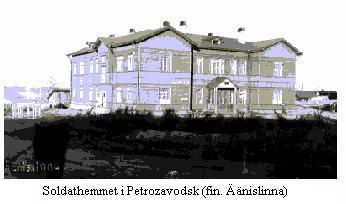
In the beginning it was quite a mess, but it didn't take particularly long for the Finns to get the administration in order. There was a post office, some kind of municipal administration – and since Sheltozero lies next to the road Petrozavodsk – Voznesenje – also a soldiers' home so that the transports would have somewhere to stop, warm up in winter and have a cup of "korviketta" – surrogate coffee. The transport of personnel almost always went on the truck beds, only the sick and Lottas could count on a ride in the bus.
Soon after the conquest, the Finns set up schools, but only for non‑Russians, my friend Nikolai Poletaev would not be with us in the future. That a large part of the students had no greater connection to Finnish other than speaking a mixed language – Veps dialect – an incomprehensible mixture both of Russian and Finnish, had no significance in the new nationalist frenzy. New subjects completely unknown to us appeared on the school timetable: the Finnish language, Christianity, temperance education and music. Some subjects, like history, were familiar from before, now we were to put other signs in front of certain events and see the course from another angle. We got rid of Marxism‑Leninism but the local "lingon" – Veps dialect – became a school subject.
New teachers arrived: Kalle Raunio, Olga Naukkarinen, Aune Laine – who replaced comrades N. Krivov, S. Tumanov – and a postal clerk at the field post office in Sheltozero ‑ Elna Liesto. At first these new names sounded somewhat strange, but we quickly learned a decent number of Finnish words and phrases and after only a week it felt completely natural that the teaching took place in Finnish instead of Russian. The previous reality disappeared as if in a fog. The discipline was different. In the Soviet school, corporal punishment was not allowed, they had other means to maintain order, but here should we learn that one did not get away with mischief unpunished. The use of physical force from a teacher's side was allowed in the Finnish schools. On several occasions Olga Naukkarinen took some overly playful youth, someone who had dared to strike a number of keys on the piano standing in a corner by the scruff of the neck. For the boys it was a sport to fold down the music stand and strike some "chords" with the piano lid. Then it was a matter of quickly as an eye running away, standing with an innocent expression by some wall and waiting for Olli to rush out of the teachers' room and try to catch the guilty one. Few escaped punishment, but sometimes the punishment could hit the wrong person. When no one looked guilty enough she would take someone from the bunch and throw the individual into the snowdrift – as a warning to others. Olli was a sharp‑tempered woman, she taught the Finnish language as well as music and quickly established a children's choir that became well known on Aunuksen Radio and on tours to the various front sectors.
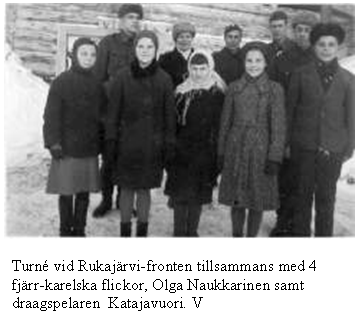
I had a good boy soprano voice and was one of those who sang correctly on one of the final stanzas of the very patriotic song "Maa polo armas, ei pidä sua, poikasi kuoloon kiusattua". I became one of Olga Naukkarinen's favorites and never had to fear any attacks either from her or from any other teachers. The history lessons became a shock for many of the Karelian children. The local population had not been subjected to overly large forced relocations, they had usually themselves moved into the cities, and retained a rather idealized view of the Soviet system. We, who belonged to the more worldly‑wise, (Izhorians, Finns, Latvians and Estonians) had through our parents received a somewhat "fairer" picture of the Soviet system. For us, the adjustment was not as difficult. It was just a matter of putting a different sign on the events. Much from the Soviet school of the past six years turned into minus or else decreased significantly in value. The Veps dialect, a variant of the Karelian languages, lies not entirely in line with Finnish, but not so far that learning goes relatively quickly, at least in childhood. I cannot remember having any difficulties at all after a time talking with the Finnish soldiers and begging for flashlight batteries, bread and much else.
Estonian is also quite close to Finnish so for my part learning Finnish was completely painless, I never noticed any transition. The problem between Finnish and Estonian is rather that a number of words are not suitable for use in the respective languages. Some Estonian family names cannot be used in Finnish and a number in Estonian very common and everyday words cannot be used in Finnish and vice versa.
In school there was a marked change in the choice of subjects. Instead of Marxism‑Leninism it became Christian studies (they swapped, one ideology – one superstition – for another) and we had to learn some hymns by heart in order to sing at the morning assemblies in the small auditorium that the school had. Olga Naukkarinen sat at the piano in one of the corners and for the devotion stood either principal Orimetsä or Aune Laine.
When we had learned enough Christianity it became relevant for some still unbaptized to become partakers of the holy sacrament. Some boys had turned about 15 years old by then, with darkening upper lip and a beard in the making. The priest could hardly hold them on his arm but it became a dive in the baptismal font and splashing of water on the head. The Greek Orthodox baptismal ritual does not differ much from the Lutheran one.
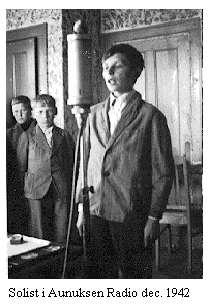
Unlike the Russian school the Finns had quite a lot of music and play. In part it was perhaps due to the fact that Olga Naukkarinen was very interested in music. Olga's family came from Parikkala, that part of Finnish Karelia which would mostly be handed over to the Russians after the Winter War. She had attended the Viborg music school and was essentially a music teacher, but taught Finnish and some other subjects as well. Shortly after the Finnish school began she put together a children's choir that sang both Finnish and Karelian songs and it included me, Väinö Kiiski and his brother Toivo as well as some girls. In Far Karelia the Finns set up a radio station named "Aunuksen Radio". As "Aunus" is designated in Finnish terminology that part of Far Karelia, which lies west and southwest at Lake Onega. Our choir became quite well known and we performed several times on "Aunuksen Radio" and also traveled around to the various military camps to perform before the soldiers all with the aim of raising the Finnish patriotic spirit. There were no recording devices so the programs went directly out into the ether.
There was a lot of singing in Russia too, though in somewhat less organized forms. Bombastic patriotic songs could be heard every day through the loudspeakers, many have stuck in the memory (at least partially) and I have sung diligently at Tol's summer camp in Källviken. Some stanzas became over time somewhat outdated – with the worst variants I used to tease high‑ranking Russian military and communists from the Soviet Union. When some Great Russian had too high a comb I used to sing:
Донскую степь увёл товарищ Сталин The steppe along the Don (river) Stalin led away От нищеты, от горя и оков from poverty, from grief and the shackles И в первый раз большое солнце встало and for the first time the great sun has risen Над молодой страной большевиков over the young Bolshevik land
Since the deification of Stalin took a sharp turn after the 20th Party Congress, the communist masters did not know how to behave. The praise of the Soviet Union came to a quick end, except in Georgia where they still honor their great son by having his portrait on car windows etc. Russia is indeed a land of music, and many melodies have come over to the West. Karl Gerhard's "The Notorious Horse from Troy" is likely a Russian melody with the original lyrics: "Arise and sing, you young communist generation…(Шагайвпередкомсомольскоеплемя)…”
Once we had learned enough of the Finnish language and Finnish songs, I could occasionally earn some Finnish marks. There was a lot of traffic along the Petrozavodsk-Voznesenye road towards the Svir front and Sheltozero lay well placed for a rest, especially in winter when it was cold. There were some buses, but only the sick, wounded, and the Lottas could travel in them; the soldiers rode on the truck beds, and in winter it could be quite harsh. If there was a tarpaulin, it could be pulled over the bed and provide some protection against the wind and cold, where the trucks could make any speed. Usually, however, travelers had to huddle behind the cab and try to keep warm as best they could. Quite often, however, there was an extra warm-up when the truck got stuck in the snow in winter or in the mud during other seasons, and the "crew" had to jump off and try to get the truck out of the snowdrift or mud puddle. All vehicles were equipped with some bow saws and a number of axes to cut down some branches and stabilize the ground under the wheels so that the trucks could get out. The Soldiers' Home in Sheltozero was a popular stop; there the travelers, stiffened by the cold, could stretch their frozen limbs and get some warm liquid into themselves - surrogate coffee.
I had become acquainted with the Lottas in the canteen, and often, when I came in to them and there were soldiers passing through, they asked me to sing. The most requested nationalist songs were "Suloisessa Suomessamme....." (In our lovely Finland...) The song is mostly about Karelia and it was naturally very popular at the time - the Karelian Isthmus had been recaptured and part of Remote Karelia as well, now the national Greater Finland ideas were flowing freely, now all Finnish-speaking tribes in Remote Karelia were to be united, and then some songs were more appropriate than others. Admittedly, it happened quite often that I was also asked to sing Russian folk songs, but not everyone appreciated that. Finnish Karelians who lived along the border were mostly Orthodox, they mastered the Russian language and had a lot in common mentally with the Russians. They seemed to be less hostile towards Russia than the people who came from Western Finland, where a Russian is a "ryssä" - the derogatory name for Russians. ("Ryssä on ryssä vaikka paistais hänet voissa" – a Russian is a Russian even if you fry him in butter).
The most popular Russian songs were those that have retained their popularity to the present day: Gypsy romances (Zyganski tabor, Black Eyes, Jehali zigane,) as well as purely Russian songs like "Stenka Razin", "Ermak", "Kalinka" and certain sailor songs.
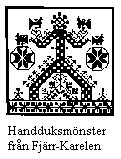
There weren't as many coins in my ear-flap cap (one of the soldiers usually took the cap from me and went around with it among his comrades-in-arms), but those who had ordered the songs paid all the more generously. The national frenzy was triumphant, and everything folkloristic was held in high esteem. The Karelian women's handicraft, linen towels with red embroidered roosters, was in great demand. Before the Finns came, every Karelian housewife had a "parade towel" hanging next to the "rukomojnik" (hand washer) - a device in the shape of a jug with a valve at the bottom.
By pressing the valve (usually in the form of a nail) water came out of the can and one could wash both hands and face. The device is still in use, last I saw one in a plastic version at my cousin Vera Petrovna's on the trip to the home regions this summer. (2003-07-10/15) The guests of honor could use the "parade towel", which usually hung a little to the side of the "rukomojnik", but for the most part there was a somewhat simpler variant for everyday use. Now all these parade towels were bought up by the Finns and since no linen production took place anymore, by the end of the Finnish occupation there was not a single such towel left in any Karelian house. Many officers were also very interested in old icons and surely made good business. It did not cost many slices of bread, tobacco or something else to become the owner of some of these religious symbols.
Another expression of national character we experienced during a visit to "Aunuksen Radio" where we were to participate in a program about Karelian song tradition. Within this tradition, the lament song, "itkuvirsi", occupies a large place, and one of the numbers in the program was to be performed by a lament singer. All programs went directly over the air. The singer, an older "babushka", stood in front of the microphone and was in the process of performing her number, and we had to sneak into the studio prepared to go on air with our performance after the lament singer finished hers. Now, the lament song is something of a "shamanism"; the singer easily falls into some kind of hysteria, into a trance, and forgets both time and place. The Olympic swimmer known in Finland, Pekka Tiilikainen, was the host, and he began to look worriedly at his watch; the time for the children's choir's performance was approaching, but it didn't look like the singer intended to stop. Pekka stood in front of her and tried with gestures to show that she should stop, which only resulted in the singer putting in even more effort; she had entered a hysterical state and could not stop. Now she was in a trance-like state: tears were streaming down, her eyes stared far into the distance, and she could not be reached by any arguments.
Pekka Tiilikainen padded over to Olli Naukkarinen, where she stood in front of us, and from the low conversation and certain gestures we understood that we were to move to another studio. The program time had been exceeded and it was impossible to put an end to the lament singer's number. We took another studio, the microphone was switched over, and we sang our Karelian and Finnish songs. Our program was over and we left to drive back to Sheltozero. When we passed the first studio, the lament singer was still standing in front of the microphone, continuing her dirge.
The previously mentioned Sheltozero children's choir, in which I mostly acted as soloist, supported by the brothers Väinö and Toivo Kiiski, got to sing often at "Aunuksen Radio" and we became almost famous for our performances of Karelian folk songs. A small group consisting of 4 girls and me crystallized after a time, and we toured on a couple of occasions on the various front sectors, both on the Rukajärvi and Svir fronts under the leadership of Olli Naukkarinen and with the accordionist Katajavuori as accompanist.
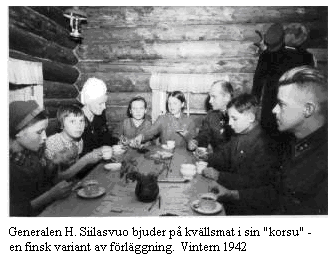
During the war, Finnish radio broadcast a program every Thursday evening with the title "Sotilasilta" (Soldiers' Evening), and it was in this that we had the honor of performing. The programs were usually broadcast from some front sector and in some cases quite close to the front line. It felt a bit exciting; we were driven in blacked-out cars with only a couple of small blue parking lights, and sometimes (when it was very close to the front) a man with a flashlight walked ahead of the car to show the way the very last stretch.
There is a cover picture in "Suomen Kuvalehti" (Finland's illustrated magazine from autumn 1942), a photograph showing us sitting in a "korsu" (a partially dug-in shelter) eating supper together with the commander of the northern front sector, General Siilasvuo.
Major General Hjalmar Siilasvuo was a remarkable man. Originally of Swedish descent (Strömberg), he learned Finnish only as an adult and still spoke it "somewhat oddly" as we children thought. He had been a commander during the Finnish Winter War at Suomussalmi and had succeeded in annihilating the Russian 163rd and 44th Infantry Divisions. It was said of him that he equipped the Finnish army with more (Russian) war material than the West did. His encirclements ("mottis") were numerous, and from them the Finns obtained a great deal of Russian equipment, both light and heavy weapons as well as other military materiel.
During the Finnish Winter War at Suomussalmi and Raatte, the Russian 163rd and 64th Divisions were almost completely destroyed. As war booty, they obtained nearly 50 tanks, over a hundred various cannons, about 400 trucks, over 1000 horses, and significant amounts of ammunition as well as personal weapons. Since the Russians' attack objective before the battle had been to cut off Finland along the line Kajaani-Björneborg, these victories had great strategic importance: the Russians made no renewed attempt during the war.
From (Isänmaan vangit, (Prisoners of the Fatherland by Aarne Långfors, pub. Otava, 1997)
Already at the end of 1940, he wrote a book "The Battles at Suomussalmi" – with short and concise phrases. "Then no mistakes arise," he taught. The book became a bestseller and was noted to be a masterpiece even linguistically. Within a few weeks, it sold more than 20,000 copies and was translated into Swedish, German, Spanish, and Japanese. Several of these countries used the book as a textbook in their military academies.
General Siilasvuo's son Ensio (also a general) tells about his father's thoughts during the war:
"It will go badly for us in this war. Germany will probably lose," Father stated. I was naturally very surprised and wanted to know how he had come to this conclusion.
”"I have seen how they act. They cannot operate in the Finnish forests and they have far too much optimism regarding goals and results. I have warned them several times that they should prepare for war under winter conditions, obtain equipment, boots, tents, and heating devices, but they have only laughed, 'this is a lightning war.' Such suspicions I cannot, of course, express publicly. I must by all means keep up the fighting spirit."
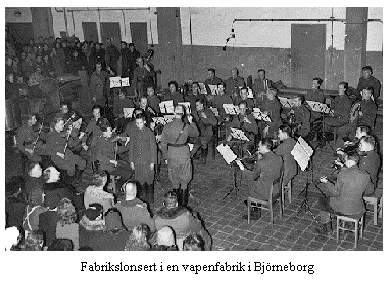
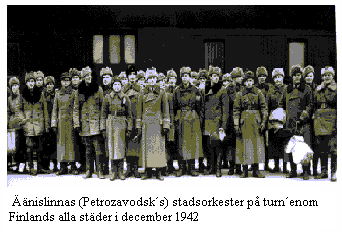
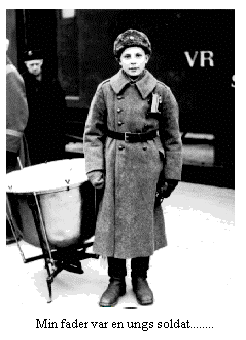
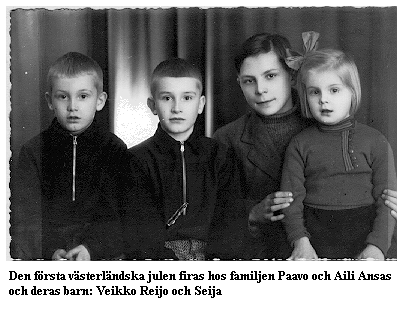
In early December 1942 I was selected as a soloist for a tour with Äänislinna's (Finnicization of Petrozavodsk) City Orchestra, dressed in the Finnish army uniform singing Karelian folk songs. The tour lasted three weeks and covered almost all Finnish cities. Concerts were held for both civilians and military. We visited several ammunition and weapons factories. The final concert took place in Joensuu and there I stayed as a guest with the headmaster's family Paavo and Aili Ansas over the Christmas and New Year holidays 1942-43. Together with the Ansas family and their children - the boys Reijo, Veikko and daughter Seija - I celebrated my first real Western Christmas. With Reijo and Veikko I went to the nearby forest and stole a Christmas tree, it was an old good Finnish custom and headmaster Paavo was in on it. It became a lifelong friendship with the family and I always visited them when I happened to be nearby. I corresponded with Mrs. Aili both from Finland and from Sweden. On a couple of occasions they visited us in Sweden, once during the time we lived in Hägersten and the other time in Nyköping. On one occasion Mrs. Aili also came along.
The majority of the wind players in Äänislinna City Orchestra were recruited from the 2nd Jaeger Regiment's wind orchestra and I became acquainted with some of them. Of the lasting acquaintances were Erkki Inkinen, Jali Ahola and later Jim Beláiew.
Erkki remained in Finland. He had his mother and a brother there, Jali stayed for a while in Sweden in the early 50s, but moved back to Tampere while Jim moved to Sweden, like most others of foreign origin who had served in the Finnish Army and felt that a continued stay in Finland became a bit hazardous. In time Jim and I became soldiers also in the Swedish Army, but that is - as Kipling says - another story.
School in Sheltozero was over, no continuation was available there as the Finns had not yet had time to establish any higher educational institutions either in the larger or smaller localities. What was I to do?
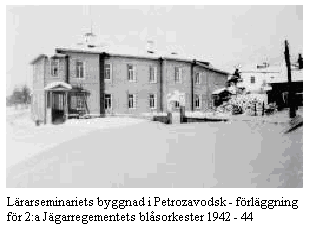
School in Sheltozero was over and something had to be figured out. All the errand boy jobs in the local commandant's office, where Väinö Kiiski found employment as an errand boy at the staff and Toivo helped his mother Katrin. She was the school's jack-of-all-trades, caretaker, cleaner and supervisor. I had no occupation. My parents spoke with Olga Naukkarinen and she contacted the bandmaster of the 2nd Jaeger Regiment's music corps, music captain Onni Palomäki about possibly arranging a place for me in the military music corps. Palomäki agreed that I should become a music student at the corps. The music students had to commit to 5 years of service in the army and since I was a minor, my father had to sign the obligation. Thus my childhood ended – if I had ever had any – and the adult world, in the form of military life, took me over. On a later occasion when I again met my relatives, mother Emely lamented that I had not had any real childhood or childhood friends. In early January 1943 I reported to the Petrozavodsk Teachers' Seminary, where the music corps was housed in a two-story building near the commandant's office. The seminary was located near the main thoroughfare from the south towards the railway station. The building was old and full of vermin. Some attempts were made to get rid of the fleas, but the result was usually very poor. A renewed attempt to drive the fleas out of the wooden beds' crevices and cracks with a blowtorch nearly ended in a fire. A couple of beds were lost and it seemed that most fleas survived, afterwards they became if possible even more furious. To prevent the lice from becoming too troublesome, we bathed once a week in the city's bathhouse and at regular intervals there was also a "delousing" of the clothing during the bath trips we were ordered to on Saturdays. In the bathhouse the clothes were hung up
in a separate room while we bathed, they were gassed. Afterwards they smelled quite bad and had to be aired out a bit extra upon returning to the barracks. The same "delousing procedure" continued later for a while also on the home front in Kuopio, though with somewhat better results. At my entry into the Finnish Army I still had my soprano voice and my voice break delayed. I was often bullied for my high vocal range and sometimes it caused a certain commotion. Once in Kuopio, when we were having our regular Saturday bath, the "bath major" came rushing into the sauna, he got the idea that the men had girls with them in the bath. He became somewhat confused when he saw that there were only boys sitting on the benches.
The teachers' seminary building, where the music corps was quartered, was a greenish two-story building with an assembly hall on the upper floor and a number of rooms where the musicians were housed. On the upper floor the orchestra's bandmaster Captain Onni Palomäki also had his room. As usual in the Soviet [Union], both central heating and running water were missing here as well. The heating was provided by wood burning and the younger musicians in the orchestra took turns serving as day students: stoking fires and cleaning in the common areas. The outhouse just outside the building was however taken care of by the prisoners of war. It was divided in two – we had the front part and the prisoners the back part. Water was cranked up in a bucket from a rather deep well just below the seminary building. The day student's duties also included sawing and chopping wood, even though the older men sometimes helped.. There was a woodshed in the yard and a gymnastics bar next to it. The bar was used frequently in the summers for various exercises such as push-ups. Some also sometimes tried to do the "little giant", i.e., swing around the bar, but none of the members managed that master feat. Below the seminary building there were a number of residential houses and in these the prisoners of war were lodged.
While the other younger music students were housed in a large common room, I was lodged with Toivo Iivarinen from Helsinki. He played French horn in the music corps, and was in civilian life a member of the Helsinki City Orchestra, on both French horn and viola. I was to learn to play clarinet, in the meantime I served as a cymbal and drum player. For that you didn't need any great musical knowledge, just a certain sense of rhythm. For the music corps, the occupation consisted mainly of playing at the various camps, traveling around to the nearest front sections along the shore of Lake Onega and playing at the victory parades on the square in front of the government buildings, which now housed staffs and administrations. Life in Äänislinna (Petrozavodsk in Russian) was quite monotonous and the boredom sometimes became almost unbearable. It takes a toll to leave one's parents at age 14 and end up in military life with its strict norms of obedience, bullying and general tedium. There was no discussion of democracy or the like, the will of superiors applied in all situations. Toivo Iivarinen was a family man with a wife and two children, he did his best so that I wouldn't have it too hard, but he had no opportunity to lighten my burden in any more tangible way. I longed for Sheltozero, for my parents, for mother's goats Roza and Zorja. The adjustment was nonetheless quite brutal and one can state that here my childhood came to an abrupt end.
After having always lived with my parents, I was now out of the quiet corner of home and subject to military order, the harsh laws of war with all its peculiarities - the duty to salute and strict discipline. The hair was cut off down to the scalp and the first month one looked like a Russian prisoner of war.
The artificial honorific in the form of a salute I have always had difficulty understanding. This lack of understanding of the duty to salute caused me to have my head shaved down to the scalp on three occasions - one of the most common forms of punishment for such negligence. Perhaps it was useful, the scalp got a proper airing during the three years in the army, the lice had no hold either and my hair has grown all the better since then. Particularly the officer cadets were "keen" on being saluted. They could easily get to us younger ones, inexperienced as we were and not used to protesting against superiors. It went worse for them when they tried to challenge front-line soldiers, these generally disregarded the duty to salute. On the threat of being locked up for lack of attention to officers, the soldier replied:
- I'd gladly sit in the clink (putka) for a couple of weeks, it's better than standing guard on the front section. The officer cadets were after all young men and concerned about their supposed honor, but against an old warrior (jermu) they couldn't do much.
So many years later, one can see the picture from different perspectives. Sure, it was both dull and monotonous to wear a uniform and be subject to others' will, but how many individuals are truly free? The limited freedom in the military can also have certain positive effects in the long run, not least character-building. Now when one hears so much about teenage problems, it strikes me that such a thing did not exist for me, or else I never noticed it. The uniform also made one "free" from fashion thinking, except that one had Sergeant Major Antti Liukkonen (who accepted such work) alter the army's straight trouser legs into "baggy trousers".
Music instruction was somewhat sporadic and took place mostly on the assigned teacher's terms. I had clarinetist Veikko Vehviläinen as my teacher, but he was more interested in photography than in teaching me, and progress was not very good. Now I will not put all the blame on him; it was probably the dreary existence that was part of the lack of interest. However, thanks to Sergeant Vehviläinen's interest in photography, I have a lot of documentation in the form of photographs left. Now, in hindsight, I would say that those were the most miserable years of my life, years I absolutely did not want to experience again. The silver lining was that I got to live with Toivo Iivarinen; it would probably have been even worse if I had been forced to live with the other music students and corporals. Since I have not associated with "my" countrymen to any great extent either at home or abroad, I have always felt a certain alienation and felt that I stand somewhat apart from the group.. Many of the boys were my own age, but encouraged by the older ones, they wanted to seem older than they really were, they tried to adopt the habits and (perhaps most) bad habits of the more grown-ups. Unlike the Swedish defense forces, the Finnish army's daily ration also included tobacco, regardless of age, and each soldier had the right to three cigarettes (Havanna kaksi) per day. Those over 18 could every other week also buy a pack of "Työmies", a Finnish tobacco brand where the pack also contained a wooden mouthpiece. I didn't feel like starting to smoke and didn't want to adopt the older boys' bad habits to any great extent either, and the waldhorn player Toivo Iivarinen, with whom I shared a room, helped. He was the father of two children and had a different view of upbringing than the corporals and the immature boys of younger age. They always had to be, what today would be called "tough", but the toughness manifested itself in harassment of those who were even younger. Peer pressure almost always has a negative impact on young people and has forced many to actions they initially don't like. No one can claim that the first secretly smoked cigarette or the first glass of beer tastes very good, but under the "supervision" of their comrades, young people feel compelled to take the step. Now there was no beer for sale, so that problem in that regard was not relevant. Sergeant Eero Suomalainen often talked about "kolmen tolpan olutta" – strong beer.
My feeling of alienation has however helped me to a fairly great independence and a certain critical view of my surroundings; I have been happily unaffected by fashion trends and sometimes imagine that even the influence of advertising has been of lesser extent.
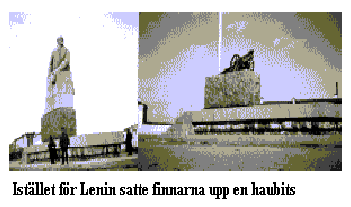
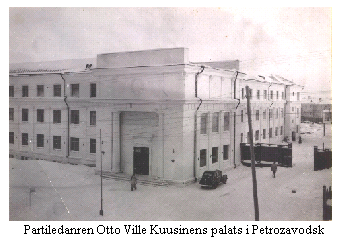
During the Finns' conquest of Petrozavodsk (Äänislinna), there was a half-length Lenin statue on a stone pedestal in front of the government building. The Finns took down comrade Lenin (consisting of several granite parts) and during the entire occupation period, the parts lay behind the Tapio cinema. Instead of Lenin, a field howitzer was placed on the pedestal with its barrel pointed eastward.
Occupied by Finnish troops.
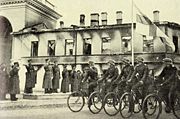
During the Continuation War's beginning, 1 October 1941 captured Finnish troops Petrozavodsk. The city's name was changed to Äänislinna (Onegaborg) and the Soviet republic's monuments were removed from the city. The name Äänislinna is a translation from Abraham Ortelius' map anno 1592, where Onegaborg stood as the name of the settlement on the site of the future city.
Finnish troops in Petrozavodsk 1941.
During their presence in Äänislinna, the Finns moved among other things Lenin's statue from the central city to a secluded place and placed a Finnish field cannon in its place. Äänislinna and the rest of East Karelia received a Finnish military administration. The Russian-speaking Petrozavodsk residents were taken to a built in the city internment camp that opened 24 October 1941. The city was in Finnish hands for barely three years, when it was recaptured by Russian forces 28 June 1944. Before the Finnish withdrawal, the Finnish army distributed food to the local population that was supposed to last for two weeks; an act unusual in war history. Wikipedia
The left-wing forces in Sweden tried in 2008 to defame the Finns' operations in Far Karelia and claimed (in a number of newspaper articles) that the Finns had put all Russians in some kind of concentration camp. That was not the case. Even the prisoners of war were essentially free and were only locked in at night in ordinary residential buildings. One such house was just below the Teacher Training College, where we were lodged, and we had a dry toilet wall to wall with the Russian prisoners of war, but with different entrances. I spoke with many of these prisoners during the time we were lodged in the Teacher Training College building. (Author's note.)
Of the indigenous population, there were not many left: only children and the elderly, so most of what one saw in Petrozavodsk were Finnish soldiers and Russian prisoners of war.
The food was bad for all of us, the difference in diet between the regular soldiers and the prisoners of war was that we always had a carton of crispbread available somewhere; otherwise the mess halls were wall to wall in a house just below the Teacher Training College. The Finnish wartime crispbread was something special: hefty pieces, freeze-dried, compact, and could not be broken off with the front teeth. To get the nutrition, one either had to soak the crispbread in tea, pea soup, or try to crack the piece with the back teeth. In soldier slang, they were jokingly called "vanikka" = veneer. The bread had some other names too – "knaku", the same term as mortar in soldier slang.
When nothing else was going on, the older musicians used to carve while the younger ones had to practice on their respective instruments. Most of the older ones made small round trinket boxes, some as gifts and others for sale, except for my roommate Toivo, he was carving a small statuette of his daughter. The sides and lids of the trinket boxes were decorated with carved roses, or with pyrography. Lacking electrically driven pyrography needles, they used a number of nails that were heated in the stoves. The brothers Antti and Onni Liukkonen were the most diligent craftsmen, they always had several with them when they went on leave.
For a while we had a cantor from Björneborg in the band, and he was distinguished by doing proper things. He didn't play any wind instrument but served as a pianist in the Äänislinna City Orchestra, assisted at theatre rehearsals, and taught us younger ones music theory and history. The teaching was somewhat sporadic and I don't remember much from it; perhaps the interest was not very great either from me or from the other music students. Palestrina, Monteverdi, the madrigals, the Gregorian chant.... that's about what I remember from his music lessons. In practice. The cantor was a large and rather coarse type with hands like bread paddles. The others joked with him about his piano touch. As a cantor and organist, he was used to pressing quite hard on the keys, and he did that even when playing piano. According to the others, he had only two dynamics: forte and forte fortissimo - loud and f...ing loud.
Have you been trained as a piano tester? was a common joke about him.
The pianos really underwent proper strength tests.
Many were engaged in handicrafts, not least the prisoners of war. It says in the Geneva Convention that prisoners of war should have the same food as the country's own soldiers, but which country fully follows these laws? Our food was not a culinary delicacy, for the prisoners it was even worse. To supplement the meager rations and get some money to buy cigarettes, many prisoners also did handicrafts. Finger rings and brooches of plexiglass, as well as other small items, were popular. The customer base was naturally limited and hardly any large profits were made, but the occupation helped time not become too long. Otherwise it was mostly card games during every free moment.
The Russians are a singing people, and the prisoners often sang these melancholic, Slavic songs. Some song lyrics were rewritten with new content, much like the German "Lili Marleen", which the Danes set new lyrics to so that the song became banned in Denmark.
Since the prisoner camps lay just below the Petrozavodsk Teachers' Seminary, I often met Russian prisoners of war. Occasionally I even went inside their camp and got to listen to their songs. The politruks, the Soviet state's ideologists and "priests", did not significantly disturb the music-making with the new lyrics. For the most part, they had fled back to Soviet territory since no major supervision of the prisoners occurred in practice. Now they were not exactly patriotic songs. Many of the song lyrics were modified to reflect reality. One of these very popular songs was "Katjusja" (little Catherine). The original tells about her and the love letters she writes to her Ivan, who is serving somewhere far away to defend the homeland.
When the Germans came, Katjusja betrayed her friend. The song tells how she forgot her Ivan and found an old field sergeant in a German kitchen. The final stanza in the new version reads: "In vain you fight, Ivan, in vain you shed your blood, love will not return".
Катюша. Катюша.
Original version. Prisoners of war's version in Petrozavodsk
Расцветали яблони и груши Расцветали яблони и груши
Поплыли тумны над рекой Поплыли туманы над рекой
Выходила на берег Катюша А в зеленом садике Катюшу
На высокий берег на крутой. Целовал фельдфебель молодой
Выходила песню заводила Катя подарок от немцев получила
Про степного, сизого орла носила юбку до колен
Про того, которого любила Русскопленные Катю презирали
Про того, чьи письма берегла Проживая свой веселый день
Ой ты песня, песенка девичья Ты лети за ясным солнцем вслед
Скоро Катя друга позабыла Его письма все в огне сожгла
И бойцу на дальней пограничной из соседства, из немецкой кухни
От Катюши передай привет Старикашку повара нашла
Пусть от вспомнит девушку простую Приносил он ей товар из кухни .
Пусть услышит как она поет Корки хлеба, масло, колбасу
Пусть от землю бережет родную И за это целовал Катюшу
А любовь Катюша сбережет И губил всю ее красоту
Свистнул он в соседнем доме платье
и принес в подарок для тебя
Не резвись, не радуйся Катюша
Что так немец полюбил тебя
В это время милый друг Ванюша
В Сталинграде бой ведет с врагом
И мечтает только о Катюше
И любви в своем краю родном
Понапрасну любишь ты Катюшу
Понапрасно кровь за Катью льешь
|Расцветали яблони и груши
А любовь уж' больше не вернешь
Пусть он вспомнит девушку простую
Пусть услышит как она поет
Ваня землю бережет родную
А любовь Катюша продает.
Эз ты песня, песенка девичья
На восток лети за ветром вслед Там скажи бойцу на Пограничье Что Катюши для него уж нет
Ах ты, горе-горюшко девичье
Поплыли туманы над рекой Выходила слезы лить Катюша На высокий берег на крутой
The prisoners also sang some very well-known Soviet songs with partially altered content:
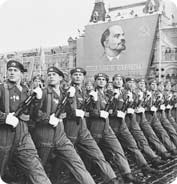
The well-known and often sung Russian song "Wide and vast is my motherland."
Широка страна моя родная, много в ней реков, полей и рек
Я другой такой страны не знаю, где так вольно дышит человек.
The last stanza, which in translation reads: 'where so freely breathes a person', instead became:
Где так сильно задушен человек . --- where a person is so strongly strangled
От Москвы до самых до окраин, с южных гор до северных морей
Человек проходит как хозяи, величайшей родины моей.
The last stanza in the original, 'Where man walks as master in my great fatherland,' became
ГПУ-шник ходит как хозяин…… GPU man walks as master….
Наше море (горе) взором не окинеш, не упомниш наших городов
Наше слово звонкое (фальшивое) товарищ, нам дороже всех знакомых слов.
Our sea cannot be encompassed by the gaze becomes: Our sorrow cannot be encompassed with one glance
Our ringing word 'comrade!' becomes 'false-sounding'
The prisoners' fixed duties included certain tasks; mainly sawing and chopping wood and stoking fires in various public buildings around the city. The railway station, the sauna, the administrative buildings, etc., were mainly served by prisoners of war. Below the Teachers' Seminary lay a large residential area and there many prisoners of war were housed. There was no real supervision; the prisoners who wanted to escape had done so earlier, the ordinary soldiers often had it better as prisoners in Finland than as soldiers in the Soviet Army. The prisoners could move quite freely and were not subjected to any major harassment as far as I could see.
The prisoners were divided into squads of 6-8 men under the leadership of an older Finnish soldier. He took his troop with him and, in something that with a little goodwill could be considered a closed formation, proceeded to one of the tasks they had to perform. For the guard soldier, time became long; he had hardly any real task. He passed the time by wandering around and talking to the other soldiers. Communication with his prisoners was mostly through sign language; knowledge of the Russian language was not particularly common, only an occasional Karelian from the border areas could make himself understood with 'real' Russians, and those usually had other tasks. Some older Finns from the easternmost parts of Finnish Karelia often spoke Russian, as it were. The younger men had been isolated too long from contact with the other side to have any opportunities for social interaction with the Russians and chances to learn anything of the other language. Remote Karelians, on the other hand, could socialize with the Finns, although it took some time to create an 'interface', a linguistic border layer with which to interact. The guard's time became long, and this could sometimes lead to certain complications.
. One of the 'guards' had become acquainted with an older 'native' and together they had made 'kiljua', i.e., homebrew. Hard bread was always plentiful, and this fact was often used for making the aforementioned drink. The soldier had been carousing with his buddy and apparently drank too much homebrew, with the result that when he was to lead his little herd to its quarters, his legs would not carry him. He is said to have passed out quite suddenly, and now the prisoners were at a loss. The soldier had probably been a decent fellow, and the prisoners did not want him to be 'burned' - get into trouble. What could be done? The prisoners were supposed to be in their camps at a certain time, formally handed over to the camp commander. The stoking had taken place at the railway station, which to some extent facilitated the transport back to the camp. Behind the railway embankment there were no large camps; the houses that stood there had no occupants. The prisoners simply carried their guard by his arms and legs. One man went ahead and watched to see that no Finnish officer was visible, and last came a prisoner with the guard's rifle. The railway underpass, which the prisoners had to pass on their way to their camp, was just behind the Teachers' Seminary, and one of the non-commissioned officers from the music corps was an eyewitness to the transport.
In the 2000s, some Swedish newspapers wrote about concentration camps in Remote Karelia, but that was just a clumsy attempt by the communist faction to blame Finland. Why would one lock up the civilian population in concentration camps when the prisoners of war walked practically free in town? We, the youngest students in the music corps, roamed around town quite a lot and partly also in the surroundings; we went up to the diving tower and other places interesting for young people. Some of the older ones were out in the surrounding forests cutting birch bark and getting vrilar and other materials for hobby activities. I got bark for a little box, which I still have, and which probably is the only memento from my youth. Our leisure activities consisted - during the warm season - of physical training, both mandatory and voluntary. The mandatory took the form of morning gymnastics or cross-country running; the voluntary part consisted of exercises on the rack and weightlifting, and various other field sports. During the cold season there was enough practice with saw and axe. We had the task of taking care of the stoking ourselves, and in a two-story house there were quite a few ovens to saw and chop wood for, as well as carry it in and stoke. The duty student on day shift did not have time for much else during his duty.
In the autumn of 1943 I was on my second leave with my parents in Sheltozero. According to the rules, the unmarried men had two weeks off every four months, and the married men every three. The roads in Karelia were mostly like cow paths, dusty during dry periods and muddy in spring and autumn. Every truck and bus equipment included a saw and a pair of axes; when the vehicle after a couple of days of rain sank up to its axles in the mud, 'all hands on deck' was commanded. Some had to cut down poles and put them under the wheels, then everyone had to push to get the vehicle out of the mud holes.
On the way back to Petrozavodsk, the car bounced considerably on the extremely poor road, and a barrel of artillery powder, which was part of the load, squeezed my right foot. At first I did not think it seemed so dangerous; it did not hurt very much. Arriving in Petrozavodsk, the cars dropped us off at the square in front of the government building, and I had about 1.5 km to walk to the camp at the Teachers' Seminary.
The journey did not occur without some effort. I had a backpack and skis (which I had received as a gift from a Finnish runner when I sang in Rukajärvi) with me on leave. The streets of Petrozavodsk are cobblestoned and the sidewalks mostly consisted of that causing considerable pain and I could only support myself on my heel. It became a Via Dolorosa to the barracks, worse when the boot had to be pulled off. It hurt terribly now, it cut like a knife in my toe when Toivo Iivarinen was to pull off the boot. After a few vain attempts we realized that it was best to go to the hospital, there was a field hospital, with no. 36, just below Kuusinen's Palace, on the slope down towards Lake Onega.
When the doctor at the hospital cut off the boot seam at the back, the foot emerged - it was surely double the size of the left, uninjured one. The evening was far advanced by now, they gave me painkillers and I could fall asleep for the night.
The following day an X-ray was taken, whereby it was determined that the bone in the right big toe was broken. The next stop was the operating room, I only remember that I was supposed to count, but I did not get many numbers counted, I maybe reached 5 or 6 before I drifted off. When I woke up there was a firm plaster cast up to the knee and it became a 3-week stay at the field hospital.
I lay in a ward with 6 others, somewhat older warriors. They were real war cases (jermu) in the convalescence stage. The nursing assistants were mostly female students who had had to interrupt their studies and now were to help at the hospitals, most were very young and shy; the older soldiers teased them quite harshly and did everything to embarrass them. Since I was underage, I was entitled to 2.5 dl of milk daily, and the serving of this always prompted some jokes. When one of the younger assistants came with the milk, the other patients made fun in the style of:
- You do not need to milk out, offer him the breast directly, it is much healthier, besides it will be teat-warm and bacteria-free!
The girls blushed and did not know what to answer. When, on the other hand, one of the older nurses came, no one dared to joke. These seasoned ladies could bite off a joke quite thoroughly; at the next dressing change they could be quite rough with those who joked too freely.
After a three-week stay at the hospital, I was signed off sick for another three weeks and returned to my parents in Sheltozero. The toe had healed well, but it took several years before I could kick the snow off my boot by hitting my foot against the stairs. The toe has remained somewhat stiff for the rest of my life, but has not caused any disturbances or balance difficulties otherwise.
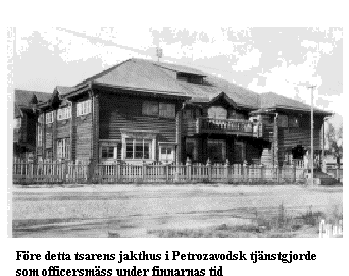
The officers' mess in Äänislinna (Petrozavodsk) was a frequently used "gambling den" and there a whole host of events took place: patriotic memorial celebrations, the higher officers celebrated birthdays and name days.
Women were a "scarce commodity" in Far Karelia; of the original population only old women and schoolgirls remained, therefore the few Finnish Lottas were very popular.
To enhance the atmosphere at the parties, quite often a number of these Lottas were also invited. To ensure morality, the younger Lottas always had an older "dragon" chaperone with them to look after the girls and their morals, but the younger officers thought she was mostly a hindrance. During one of the events, the attending doctor thought that the "dragon" should be neutralized. He would see that she got something in her drink so that she would fall asleep and in that way the company with the young girls would become a bit more interesting. The doctor mixed and gave, but the result was the opposite. The venerable lady was by no means made sleepy by the drug. She perked up quite thoroughly and this resulted in that when all the other younger Lottas exhausted left the event, the "dragon" was the one who stayed behind and the gentlemen were forced to entertain her and could not leave the event, as many would surely have wanted to. The evening was far advanced.
Life for the music corps in Petrozavodsk consisted of playing at the various events that were given both for soldiers and for the few civilians who had not left with the Russians. These mostly consisted of children and the elderly. The Finns tried to maintain a certain measure of cultural events and at these the music corps was mostly present.
The brass band would play at various events, parades and solemn occasions. Sometime in late autumn a new bridge was to be inaugurated and I was also detailed as a drum carrier for the drummer Onni Puustinen. The local commander spoke beautiful words about connections between peoples and that this bridge would constitute such a link, after which the military chaplain would bless the bridge. The bridge was supposed to be brand new and unused, but some car had managed to drive over it and left tracks in the frost-covered bridge.
- It is as usual, sighed the pastor resignedly. When I am to consecrate or inaugurate something, it has already been used!
In the summer of 1943 many concerts were given in Petrozavodsk's park for "Culture and Rest" (Park kultury i otdykha), as the institution was called. Since I was only participating as a carrier of the bass drum to assist Sergeant First Class Onni Puustinen, I had plenty of time while the concert was ongoing. I bathed in the stream that runs through the park, and climbed a high wooden tower that was intended for parachute jump training. The bathing came to a sudden end when I nearly collided with a large turd that came swimming towards me. Like most Soviet cities, Petrozavodsk also lacked a sewage treatment plant and the stream had to receive most of it, both liquid and solid. The wooden tower was old, warped and rickety and actually it was forbidden to climb it, but who could stop me? From a height of 70-80 meters the city could be viewed in all directions. There was another lookout point in the city, a ski jump tower that was somewhat safer to visit. We went there quite often in our free moments.
Operettas were performed in the city's theater. The theater orchestra consisted to a very large extent of members from the 2nd Jaeger Regiment's music corps; Erkki Inkinen played violin, (he played E-flat clarinet at parades), Toivo Iivarinen was a French horn player, but also played viola, then I remember Lieutenant Sysimetsä, he was not in the music corps but was a doctor from Björneborg and played cello; the same was true of many other musicians, they as a rule mastered several instruments.
On one occasion they performed "The Count of Luxembourg" and since I had not yet learned to master the clarinet to the degree that I could be considered useful in the orchestra, I became instead an assistant to the percussionist Onni Puustinen. He needed help with the bass drum, it is quite heavy and we had no other means of transport within the city's limits than the "apostle horses" (shanks' mare). Only when we were to go out to the surrounding countryside could we get access to a truck. During the time the performance was going on, I could play the spectator; for a while I knew the operetta almost by heart, I saw it about 20 times in a very short period. I sat at the back (as far as there were any free seats) and after the final applause I went out into the foyer and from there to the stage door to help with the closing duties.
Once there was a gala performance with Aulikki Rautavaara and some other famous Finnish artists. The commander of the front himself, General Siilasvuo, with his entire staff was present, and after the performance ended I was as usual to rush out through the main entrance and run outside the building to the stage door before everyone else had time to stand up. The audience stood up, but no one moved from the spot and I remained standing by the exit door, because it turned out that the "dignitaries" - the general with his staff - were to leave first without having to push through the rest of the audience. Everyone's eyes were fixed on the general and his entourage; I could not get out through the door, I just stood there feeling foolish, not knowing what to do.
The entourage approached and I felt that I would need to do something, but what? When I saw a younger officer from the general's entourage head off before the others towards the door, I suddenly had a bright idea. I was standing by the door and that became my salvation. I yanked the door open and snapped to attention just before the general reached the exit. Siilasvuo stopped, patted me paternally on the head, thanked me for the courtesy and asked my name. The situation was saved on my part, and the bandmaster Onni Palomäki, who had witnessed the event from the orchestra pit, praised me for the attention shown to senior officers. I naturally did not reveal that it was more a stroke of chance than a premeditated action.
When the Russians had defeated the Germans at Stalingrad, the situation for the Finnish troops in Far Karelia and on the Karelian Isthmus became difficult. The Russians moved large forces to the Karelian front, and the retreat became a reality. At the end of the summer of 1944, the entire military band had to board the train back to Finland, and at the last minute – the band was not first on the list for the withdrawal, and the departure was very rushed. A couple of times the Russian air force attacked the train with the retreating troops, and we had to run into the woods to escape the gunfire. Yet the Russians were not so eager to pursue the trains. The trains also carried anti-aircraft guns; these fired at the relatively slow-flying aircraft, and the attacks ceased. After a few days’ train journey we arrived in Tampere and were billeted at the Alexander School in Tampere – on the second floor in a girls’ handicraft room.
Recordings
- 1943PetrozavodskA.mp3
- 1943PetrozavodskB.mp3
- 1943PetrozavodskC.mp3
- 1943PetrozavodskD.mp3
- 1943PetrozavodskE.mp3
- 1943PetrozavodskG.mp3
- 1943PetrozavodskH.mp3
- 1943PetrozavoidskF.mp3
- Donsteppen förde Stalin bort från nöd.......mp3