Tammerfors 1944-45
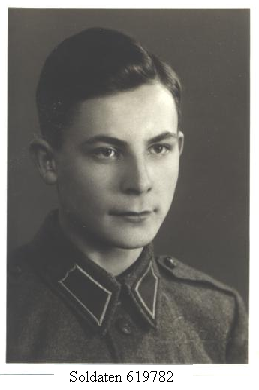
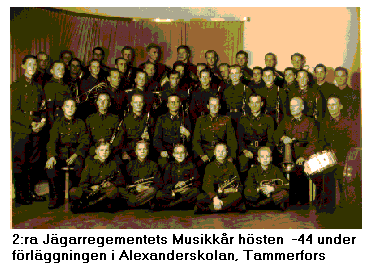
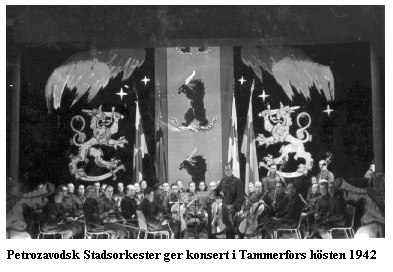
Whe the Germans were defeated at Stalingrad, the Russians gathered large amounts of troops at the Svir River, renewed fighting started after almost 2 years of ceasefire and for the Finns' part the retreat from there became a fact. Parts of the 2nd Jaeger Regiment were transferred from Petrozavodsk to Tammerfors and quartered in the Alexander School, next to Tavaste Trädgårdsgata. There on the second floor in a needlework room for girls, a temporary barracks was set up for us. After the band had been partly spread in various places it was gathered again and had to take care of funerals of war heroes at the various cemeteries around in Tavastland. It was a very beautiful spring and summer, the weather stayed mostly warm and sunny. The days we had no funerals we spent at the bathhouse in Pyhäjärvi - a cold bathhouse in classic style.
My experiences of human sex life were nearly zero, the only thing I knew somewhat was animal mating: mother's billy goat and the dogs in the village. This ignorance led to certain consequences. There was an older distinguished gentleman who showed a very great interest in me. He talked about what a figure I had etc. and as unsuspecting as I was (despite the small experience at the Tapio cinema in Petrozavodsk) I did not react particularly. The man's advances were however noticed by Sergeant Unto Sipilä and he told me about a phenomenon that had largely escaped me. I had probably heard something through the older boys' stories, but not paid much attention to it. The man turned out to be one of the more well-known homosexuals in Tammerfors and Unto Sipilä ensured that there were no more meetings. Unto also said that some of the corporals had been to the man and extorted money from him. The man was a well-known figure in Tammerfors theater world.
Some of the teachers had been demobilized after the peace with the Russians was signed and the annex of the Alexander School was taken into use again. Many teachers had returned to their civilian work and here I saw one of the teachers from Sheltozero again - Lieutenant Kalle Raunio. Tammerfors is Finland's textile center and for that reason a "women's city". Our "Don Juans": Jääskeläinen, Baldanius and Kähäri were out and about ravaging among the surplus. The worst of them was Kähäri, a crude and rather unpleasant fellow who throughout the war kept nagging that when peace came he would indeed turn in the uniform and put on a soft civilian hat. When the peace bells finally tolled and he got to turn in the uniform, there was by no means a soft felt hat for him - he almost immediately (according to reports) went and signed up for the Finnish Navy. His later fate is unknown to me, he was not at the comrades' reunion in Helsinki 1983 and no one had any further information about him, but rumors said that he drank heavily and the consequences are usually given.
One night I woke up because it was unusually lively in the barracks at the Alexander School. It usually became like that on Saturday evenings when the corporal crew came back from town and were intoxicated. Usually the noise ended pretty quickly, after they had gotten to tell about their exploits, both fatigue set in for them and peace for us others, but now something extra was going on. It turned out they had brought a woman with them to the barracks and after the corporals had had their way with her, some of the older boys would also have a love experience. The whole affair was crude and unsympathetic, now and then they wiped her in the crotch with a towel. Those of us who thought it was extremely unpleasant had little to say, the noise, the clamor and the crude language could not be avoided. The corporals were drunk, so was the girlthe also. When those in need had had their fill, she began to sober up, cried a little and was thrown out onto the street again.
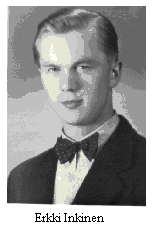
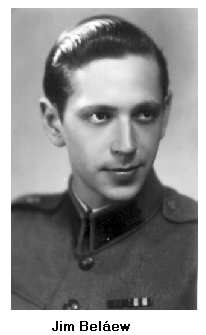
The conscripts Jim Beláew, Erkki Inkinen, who were not yet demobilized, had their own barracks and escaped the horrors. Jim had just become acquainted with Iris, who had a photo studio in St. Michel and she came at regular intervals to visit him. We had music rehearsals for a couple of hours in the mornings and the afternoons were devoted to funerals at cemeteries around Tammerfors, most often at the heroes' cemetery in Messukyla just outside, where we had to march in closed formation - a distance of about 5 km. Jim Beláev was in charge of the bass drum and I had charge of the cymbals. On the way to the grave site we passed the monument to the Red Guards fallen in the civil war in the early 1920s. In the areas around Tammerfors and Tavastehus there had been very fierce fighting and it was an extremely impressive monument that was now erected at the Messukyla cemetery.
The burial ground lies high up on a sand ridge and with the heat that we had in the spring, incidents sometimes occurred. The earthly remains of the fallen war heroes were indeed transported as quickly as possible to their home districts, but it could still take several days before they reached the destination and by then nature had already begun its work of decomposition. From dust you are come...... Polvo eres en polvo te convertidas......
When the bodies had been on the road for a few days in the heat, it smelled quite strong and the smell of death is nothing one gets used to; it was just as disgusting every time when it had been very hot and the transport had taken a long time. We did gain a certain familiarity and could by the end endure quite strong smells, but the honor company was changed for each funeral and new men came, sometimes with somewhat more sensitive noses. Moreover, they had to stand at attention almost all the time and in the heat there could be certain consequences of standing still. If you stand still for a long time at parade rest, the blood circulation will protest and on several occasions the boys just fainted. Right as they stood, someone would start to sway and lose balance. If he was lucky, the comrades saw this and grabbed him before he fell to the ground, but often it was the outermost man in the line who got sunstroke and passed out.
Jim Beláew tried on one occasion to mitigate the corpse smell by sprinkling eau de cologne on both himself and his handkerchief, but he did that no more than once - and even then he was almost lynched. The combination of smells was possibly even worse than just the corpse smell, we all nearly choked and felt more nauseous than ever before.
After having participated in a large number of solemn ceremonies, the stamp of solemnity is lost after a time and what for relatives and survivors was a sacred action became for us just something to endure. When the amount of flowers and wreaths was great and we knew in advance that the reading of all condolences would take a long time, there was always someone not too sensitive musician (usually Eero Suomalainen) who exclaimed:
- A bloody lot of hay they've got together today!
Often there were no bodies. Especially at the end of the war, when the Russians had concentrated their forces against Finland, this was the case. During the retreat there were not always opportunities to take care of all the fallen and many were left where they fell. These were buried symbolically. In total I managed to bury 186 fallen warriors in Messukylä.
In the autumn of 1944 the war was over, the Germans were thrown out of northern Finland and the Finns had managed to make peace also with Russia - under harsh conditions. The Petsamo area had to be ceded, likewise large parts of Karelia and parts of the Hangö peninsula were taken over by the Russians. It was a peace about which it was said: "War is cruel, but peace is hell" (Sota on julmaa, mutta rauha on helvettiä). When the Finns had made peace with the Russians in the late autumn of 1944, most of the Finnish defense forces were demobilized.
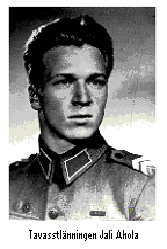
The Cathedral School in Tammerfors served as a center for demobilization and there I had for a month's time the job of receiving hand weapons, cutting off shoulder straps on uniform jackets, removing the belt and removing the cockade from the cap. Now the men became civilians and turned in their hand weapons. The Finns had before the war large civil guards and the members of these mostly had their own rifles. Now that the war was over, many hoped that all fighting would be over for their part and many soldiers turned in their private weapons: both rifles and submachine guns and pistols. I especially remember a sergeant. He stood quite a while with his "pystykorva" (the Finnish army rifle, somewhat shorter than the m-96) and thought about what to do.
- I have been in both the Winter War and the Continuation War, now it is enough for me, he said and laid his very well-maintained carbine in a pile among the others.
On some of the carbines, notches were carved into the stock; I counted six on one – what could that mean? One could make certain educated guesses. Some weapons were missing their cards, and I was quick to seize two "Parabellum" pistols as well as a considerable amount of ammunition. Boys are the same at all ages, and I was no different in that regard. I always carried one of the pistols with me; the other was left in the attic at Erikki Inkinen's mother's house in Kuopio. Unfortunately, the box with all my belongings was lost when the house was sold. At that time I was already in Sweden and had only sporadic contact with Erkki. A rifle, however, is said to be hidden in the false ceiling of the Music Corps building's attic in Kuopio. The house was still standing in 1967. During my service as a travel leader for Swiss people, I had the opportunity to visit the city, but the regiment had been disbanded and all buildings were locked and boarded up. On the gates of the Niirala barracks it said "Pääsy kielletty" (Access forbidden). I felt I had a certain right to look at the place and entered the barracks area. No guards were in sight, but after a while a patrol came and chased me away. It didn't help that I explained to them how things were and that I had worked there for a while. If I didn't leave they would take me to the duty officer, one of the soldiers said. I didn't have much time and left the place.
The images of the buildings change considerably after a number of years. Then, 1945-46, I thought that, for example, the weapons storage was a very large building, but now when I looked at it, certainly one long side was very long, but not as impressive as before.
The sauna building was still there and brought back memories of certain aspects of bathing. Normally sauna baths took place every Saturday afternoon, and every three months there was a delousing sauna. We undressed, hung our clothes in a separate room, after which the doors were closed and sealed very carefully. After we had bathed the doors were opened again, we retrieved our clothes, and they smelled quite bad before we had aired them. We didn't know much about what gas they used; could it be the infamous Cyclon-B? It killed many more, not just the lice.
Recordings
- 1944TammerforsA.mp3
- 1944TammerforsB.mp3