Falkenberg
In the fairly large refugee group in Borås, consisting of Russians, Estonians, and Ingrian Finns, Sulo Korpelainen occupied a prominent place. He was a priest's son and interested in education, knowledgeable in Finnish, Russian, and to some extent also in Estonian. His father had disappeared to Siberia during the great purges sometime around 1936-38. Now he only had his mother and grandmother with him to Sweden. Sulo leaned toward the literary side; he wrote for the Ingrian Finns' newspaper and tried to increase his countrymen's education. During a visit to the Aatolainens, where there was some kind of gathering point, we came to talk about education (or rather further education) in languages. Niko Aatolainen's uncle Alexander was also very eager for the young people to educate themselves as far as possible. During the conversation with Sulo, it emerged that there were certain possibilities even for us, penniless refugee children, to draw from the well of knowledge and learn the Swedish language more methodically – and perhaps also something else. Sulo had spent a winter at Katrineberg Folk High School in Halland and received instruction in both Swedish and other subjects. He said that there were opportunities for three or four people to get scholarships and spend a winter studying Swedish and some other general subjects during the course's 22 weeks. If there were any interested, he would take care of the paperwork with the application forms since he already knew the teachers at Katrineberg. Sulo said that the folk high school was a good form of education; you might not study entirely at your own pace, but almost.
The summer passed and there wasn't much talk about school, but when autumn began to approach, Sulo came with the papers; I filled in my name and sent the form off to Katrineberg Folk High School. It wasn't more than a couple of weeks before a card arrived from the principal, Torsten Åberg, with an invitation that I was welcome to the winter course 1948-49.
On 18 October 1948, four young men arrived at Halland County Folk High School Katrineberg in Vessigebro. They were Sulo Korpelainen (who was to attend his second winter course), Jussi Huli, Pekka Lappalainen, and myself. I tried to bring along my best friend Niko Aatolainen as well, but he wasn't interested in continuing his studies. He had his family, and they were going to start a sewing factory instead. Today (1993-01-23), Pekka Lappalainen is a deacon somewhere in the Örebro area and has changed his name to Rätteli; Niko Aatolainen is retired after many years of work in the textile industry, while Sulo and Jussi have been gone for some years now. For Jussi Huli, life took a tragic turn. He was a cheerful and lively young man but had a certain inclination toward alcohol, and that became his fate. At first, things looked fairly good. He certainly had difficulty staying at any one workplace for long; he was a real job-hopper, but he stabilized to some degree and married a fashion director at ABC Clothing – Marianne Svensson. Jussi, however, had great difficulty staying within the bounds of sobriety and marriage, and it wasn't all too long before he divorced Marianne and their common child, Elisabeth. I am Elisabeth's godfather, but our paths parted quite early, and I haven't seen her since she was a child. According to information from Sulo Korpelainen, Jussi was said to have fallen down a staircase and hurt himself so badly that he became partially paralyzed. He stayed somewhere in western Sweden at a home for the disabled, and Sulo visited him now and then. The latest reports indicated that Jussi had largely lost both mobility and the ability to communicate and could only receive messages. He died in the mid-80s. Sulo died at the end of the 80s, and by then he was almost twice as heavy as when I first met him. Both he and his wife liked good food and especially hot dogs – such things tend to have unpleasant consequences with the years.
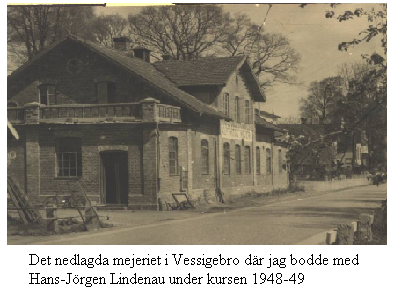
Katrineberg Folk High School was run as a boarding school by the County Council of Halland County, and since there were more students than the school's accommodations could hold, I initially had to live in Vessige's former dairy together with a West German scholarship holder – Hans-Jörg Lindenau from Berlin's French zone.
My German was not worth the name; I had only practiced a little now and then with the German soldiers on leave who sometimes were in Finland. The largest part of my knowledge came from Sergeant Unto Sipilä in the 2nd Jaeger Regiment's band in Finland, who studied German and subscribed to the magazine "Signal", from which I sometimes tried to decipher a few picture captions. They were the pinups of the time, which they had in the center spread; they were, however, quite decent ladies, and if, contrary to expectation, they showed anything, it wasn't anything essential. Even if they were quite naked, there was always a summer hat or some other kind of draping that happened to conceal unmentionable parts of the body. Most of the pictures were so-called nudes and greatly resembled statues.
However it was, Hans and I could soon understand each other quite well. I learned German and he learned Swedish; we met somewhere in the middle with the languages, and toward the end of the course it worked surprisingly well. Sulo was now in his second year and got to live in the school; Jussi and Pekka were lodged with Mrs. Anna Andersson and Miss Gerda Persson, two very pleasant ladies, whom I also got to know when I attended my second school year. They lived on the other side of the river in an old house and had their brother Nils Nilsson as their nearest neighbor. He had been the manager of the small power plant that was on the property, as well as a sawmill and some of the town's other small industries.
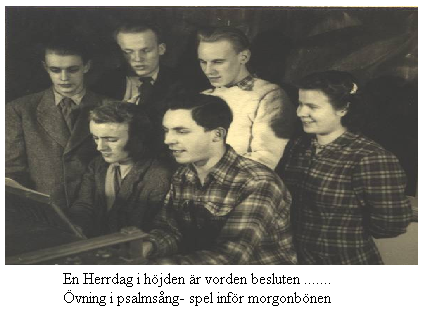
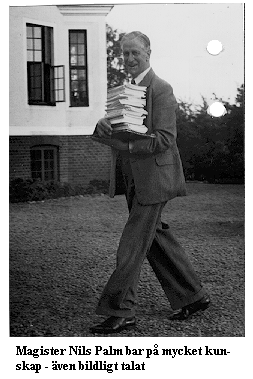
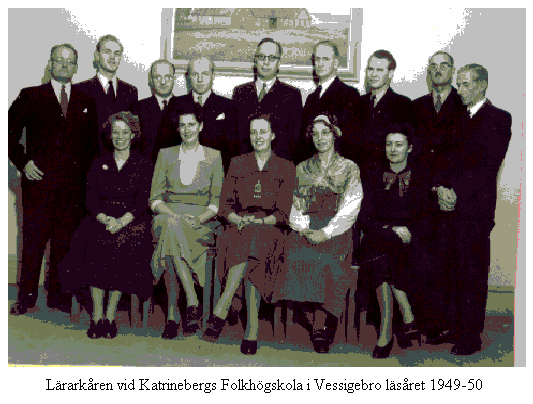
The school's principal, Torsten Åberg, was the author of several textbooks in both Swedish and history. As our head teacher and class supervisor we had Nils Palm, an outstanding pedagogue and literature lover. Extremely well-read and a skilled teacher when it came to instilling literary knowledge in the students. He brought the authors and poets to life for us. Karlfeldt, Fröding, and Ferlin became well known to us. Principal Torsten Åberg taught history and geography; Miss Hessling taught Swedish and German; Dr. Lundgren taught physics and chemistry; Magister Järving taught English; and as our gymnastics teacher we had a young talent, Nord….. The school was run in a somewhat Christian spirit, but Nils Palm made many a lad and lass doubt the positive effect of religion on people. His morning prayers were unlike any others in that regard; it was more a matter of instruction in humanism and ethics; religion was touched upon peripherally during his lessons, no more than the curriculum required.
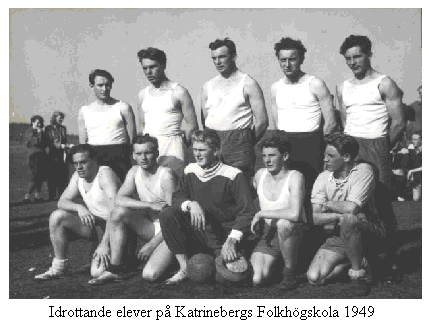
There was quite a lot of gymnastics in the curriculum, and I took a few minor gymnastics instructor courses. On Saturday afternoons, the foreign gang (including Hans-Jörg) cycled to the school in Ljungby, where there was a really good sauna of Finnish design. Once Hans-Jörg had learned to appreciate this perverse Nordic pleasure, there was no difficulty getting him to come along. Many foreigners initially think that sauna bathing is self-torture, masochism, and compare the bathers to medieval flagellants, who whipped themselves with birch rods for their sins. Naked to boot – and at a high temperature!
It was a period of extremely diligent homework. Those who wanted to take an additional winter course had the opportunity during the second year to take the school-leaving exam in five subjects: Swedish, mathematics, physics, chemistry, and literary history. We didn't just study; we also enjoyed ourselves quite a bit. Every Saturday there was some kind of gathering, and most often it was Kjell Berglund playing the accordion so we could dance in the gym. Many of the farmers' children had their homes nearby and were not as often at school during the weekends, but we foreigners had little money and also a long travel distance to Borås, so we mostly stayed. In fact, I had no close connections to Borås whatsoever, no relatives, and only Helge Johnson, the Aatolainen family, and Mrs. Ida Holmqvist to visit.
During the breaks between lessons, it was like in all schools – the students chattered and joked with each other, discussed the upcoming exams, and later in the spring, when the sun began to shine and we could spend time in the school's large garden, we sat on the porch, sunbathed, and thought about things other than exams.
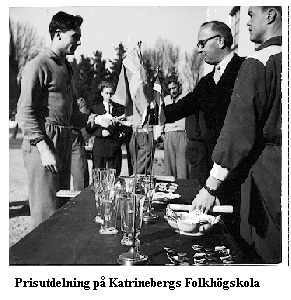
Katrineberg had a good gym, and on the evenings when we thought we were done with our homework, we used to gather there and engage in boxing and other "manly" sports. With Sulo Korpelainen, I went quite a few rounds. It was naturally a completely amateurish "waving" with a pair of boxing gloves each, but sometimes – though not often – certain hits could be noted. In the spring, we had many competitions, and I won quite a few events: high jump, long jump, and running. At the same time, I took the opportunity to take a gymnastics instructor and swimming instructor course. The latter was of great use during my Swedish military service; I got to "play" swimming instructor on Styrsö for some coastal artillerymen who were to become regular officers in the Navy and had to be able to swim to be accepted into the service. I myself, in turn, escaped some other more unpleasant duties during the drill period and could splash around in the then newly built Vallhalla Baths during working hours to pass the exams for the "swimming master".
My interest in photography has always been great (the first box camera was bought from Sergeant Vehviläinen in Petrozavodsk, Far Karelia in 1944) and it was only natural to become acquainted with the community's photographer - Karl-Erik (called Cylle) Palm and his wife Kerstin. I helped out a little now and then in the studio, with the result that when the 23 weeks of the course were over and the summer holiday began, I stayed on with them in the studio as an intern. Through the windshield of Cylle's Model T Ford, I got to know Halland on the photography trips that Cylle made and where I was allowed to tag along. On one occasion, I also went along to visit his parents in Helsingborg. I especially remember Cylle's father, and for the following reason. Cylle's mother served breakfast and I wanted both milk and sugar in my oatmeal porridge. Cylle's father wanted neither.
- I want to taste the real "farm flavor" in the porridge, he said.
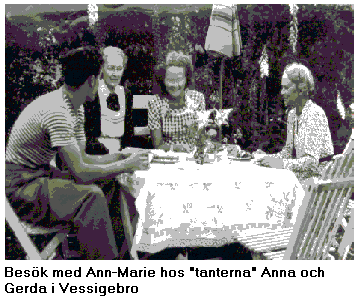
The studio was in the same house where Cylle and Kerstin lived, but the house wasn't large and I moved out to the "ladies": Anna Andersson and her sister Gerda Person. They didn't have any extra lodgers during the summer break, just the regular one - the control assistant Hans Söderström. Hans-Jürg Lindenau had returned to Germany and it was nicer living with the ladies than at the dairy. Mrs. Anna Andersson had a son, about whom she sometimes complained rather cautiously. Not only did he live far away in Ludvika, he was also unmarried, though the marrying age had long since passed. Eventually, however, he mended his ways, found a wife of mature age and within the space of a few years became the father of four or five children.
The "ladies" were a pair of women in their 60s and they were pleased to have a young man living with them. Söderström was rarely at home; his work as a control assistant took up most of his time and he also played the accordion, which meant he was often out with accordion-playing friends. At the "ladies'" house I cut the grass and trimmed the hedges, trying to be useful in some way. The ladies themselves were so small and delicate, you hardly dared sneeze in their presence, afraid they would keel over from the draft. Neither of them could manage to pull a lawn mower any longer. Yet they were rather hardy little creatures and reached a very old age, both Anna and Gerda living past 90. Both of them radiated great gentleness and it was hard to imagine they could ever get angry. We became very good friends and even much later I always visited them whenever I was passing through or heading to Falkenberg. I didn't just have a room with them. Often they also provided me with breakfast.
- The Palms are newlyweds and newly established and probably don't have very good finances yet, sister Gerda used to say, come down and have breakfast with us before you go to the Palms!
Hans Söderström, the control assistant, played the accordion and we had quite good times together on the few evenings he was home. He rode his 95cc motorcycle to the various farms to take milk samples. At regular intervals he fell in love, too often with the wrong person and the relationships never led to any lasting happiness. Söderström was an economically minded person and for the most part it seemed that his love affairs and his finances did not match up. For a while he was involved with a widow and when that ended he married a girl who already had a child, but unfortunately her parents were free church members and, moreover, apparently of the more intolerant sort. Söderström was pretty much like most people, not particularly interested in religion and seemed to get along quite well without the priests' sermons. The wife's parents were naturally entirely against the relationship. Despite a fine villa (which Söderström had built out toward Arvidstorp) and seemingly good finances and order, the marriage did not last. Söderström was unhappy after the divorce; he had developed an attachment not only to his wife but also to her child — a boy around 6 years old. The relationship with his wife was good, but her parents disturbed the marriage. The wife did not go to the prayer house as often as her parents thought she should, and Söderström himself found religion only a disruptive factor in life. According to Söderström, the following incident supposedly formed the culmination of the quarrel and became decisive for the breakdown of the marriage.
He had caught his stepson secretly smoking (as all children do). Söderström didn't see anything remarkable in it, but he thought the boy should be allowed to smoke openly from his pipe and thereby take the secrecy out of it. The wife's father happened to witness this and in the ensuing exchange of views, the wife also took her father's side against him. Many harsh words were spoken on both sides and divorce became a fact. Söderström paid dearly for his infatuation; he had to sell the villa. They had no prenuptial agreement and the wife was entitled to her half.
God is great and shall be held in honor, but Mammon has a larger place in the heart of religions. Unfortunately, this is all too common in religious circles and most noticeable among the free churches. In Borås, my wife Ann-Marie had a free-church colleague who was hounded by his brethren in the Pentecostal congregation over the tithe. Ann-Marie told me that two black-clad men with leather briefcases used to come at regular intervals to the city planning office and take the colleague into a room "for private consultation." The colleague was said to sometimes rush out red-faced with agitation; presumably the religious money-changers were too hard on him over the tithe, which he perhaps had difficulty affording.
It was a good summer in 1948, the work in the studio didn't demand much of me and for two weeks I was "manager" and ran the photo studio on my own. Cylle and Kerstin had gone on vacation and entrusted me with all responsibility for the studio. Perhaps there wasn't much profit, but the business didn't go under either.
I cycled a lot; the year before I had bought a bicycle of the brand Rex with one of the first examples of a 3-speed hub (Sturmey Archer). Bicycle gears were still novelties and didn't work particularly well. On several occasions, when the cogs slipped, I hit myself quite hard in the groin; it nearly went badly for certain tender body parts. The price of the bicycle was 157 kronor — on installments at a Borås bicycle shop next to the stream, opposite the City Theater.
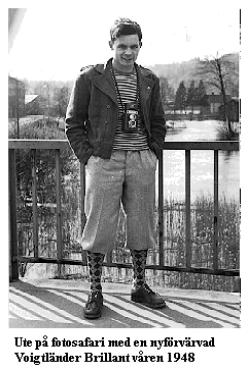
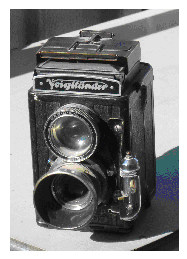
When the Palms returned from their vacation, I was to take a longer break before the second year of the course began and decided on a bicycle trip to Sälen. I had seen pictures from there and felt a longing for Norrland. The years in Kirovsk on the Kola Peninsula (1935–1941) came to mind, and now I wanted to visit those barren regions. The year before, I had spent my holiday with my former workmate from the Weaving Company, Helge Johnson, in Mora, at his brother and sister-in-law's place, and thus had a point of contact with them. At the end of August, I packed my Finnish army rucksack with some food, a blanket, and a Voigtländer Brillant reflex camera (bought the year before at Johansson Foto in Borås for the then "enormous" sum of 340 kronor), set off on the country roads and saw much of Sweden during this journey. I had no tent or sleeping bag; I had to sleep outdoors, but the hay harvest had been going on for a while and there were plenty of haystacks and barns to sleep in.
The bicycle journey became a quick trip. The route went through Gothenburg, Uddevalla, Bengtsfors with a detour to Söderström's parents in Högsäter. The parents had been in Vessigebro visiting their son and when they found out I was later heading to Sälen, they invited me to visit them. The father of the family was a baker and not only did I eat well at their home, I also got a good supply of bread and buns to take with me for the rest of the trip.
It took only a few days to reach Mora, where I stayed with Helge's brother and sister-in-law for a couple of days, played with their daughter Inga and continued the journey toward Sälen. I arrived in Älvdalen late in the afternoon, stopped at a store and bought provisions in the village general store, then continued almost another 5 miles before I made camp by a barn, ate my evening meal and crept into the barn for the night.
I had probably slept for a couple of hours when I was brutally awakened by a flashlight shining in my eyes.
- What is this about? I asked.
- We are from the police. You are to come with us to the police station.
I tried to find out what it was all about; to my knowledge I hadn't been involved in anything that would warrant police intervention, but the policemen did not answer. They just told me to get into the car and then we drove back to Älvdalen. By this time it had become quite late, but despite this the police started questioning me about my activities during the past week. The policemen asked if I had been in Avesta on the 28th of August, and it was easy to answer no. That was the day I started my bicycle trip from Vessigebro. I asked them to call the "ladies" there to get confirmation of my statement. It wasn't too late yet; the police contacted Vessigebro and learned that I had started on the mentioned day and the matter began to be sorted out. Then I got the explanation for my detention.
On the 28th of August, a taxi driver had been robbed and murdered in Avesta and now the police were looking for the perpetrator. All suspicious persons were taken in for questioning. I hadn't shaved for a couple of days, spoke Swedish with an accent and perhaps generally looked somewhat shady — that was probably the reason for my detention.
When the police had obtained all the information about me and established that I could not be the murderer, they asked me if I wanted to be driven back to the barn right away or if it could be done the following day. In case I wanted to sleep indoors, the holding cell was available for the night. I understood that they were not particularly eager to drive the 5 miles to "my" barn so late in the evening and said that it didn't matter much to me, I can sleep anywhere and someday one might try out a holding cell as well. It can give some idea of what it would feel like to be locked up. I was deprived of my belt, shoelaces, and scarf (according to holding cell regulations), but the door to the cell was left open. (It became my first and, so far, only night I have spent in a holding cell.)
In the morning, the police woke me and treated me to a hearty breakfast at the Älvdalen Hotel at the police authority's expense. When the hotel staff learned my story, they provided me with a considerable amount of sandwiches as well; they lasted not only to Sälen but also a good stretch on the way back. Then the police drove me back to the barn, where I had my bike, and I could continue my journey. To be safe, they gave me a paper stating I was innocent, in case police colleagues further ahead would want to nab me again.
It was heading toward autumn and the weather began to worsen. Before I reached Sälen it rained quite a bit. I wanted to see the cable car and cycled up to it. I didn't see much of the cable car; the mountains were shrouded in rain and fog. I stood for a while behind a wall sheltered from the rain before I turned back toward Vessigebro. That was a quick look at a sight; there weren't many tourist cable cars in the country at that time, and besides, the cable car wasn't running in the summer.
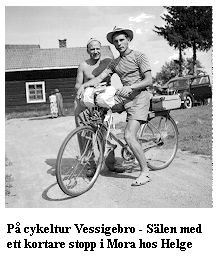
The return journey went via Mora, Borlänge, Askersund, and Hjo – it was a fast trip; I remember that one day I had traveled a little over 200 kilometers. Since then I have not visited either of the two latter towns again, at least not by bike. The homeward journey was without any incidents at all; I slept in barns and haystacks; further south the weather was quite good again. When I was back in Falkenberg I had covered about 1500 kilometers.
There were no other Norrland adventures in the following years; it was not until 1963 that I renewed my mountain adventure, but then in the company of my family and during the winter sports holiday. After a few years, there were several "mountain adventures," but then as a guide for French-Swiss teacher groups through Reisebüro Kuoni in Zürich.
Recordings
- 1948FalkenbergA.mp3
- 1948FalkenbergB.mp3
- 1948FalkenbergC.mp3