1949 Ann-Marie's story
My parents Lilly (née Larsson, 1892-07-18 – 1983-11-02) and Algot Kristiansson (1902-07-23 – 1087-03-30) got married around 1910 and in the marriage 6 children were born:
Ruth: 1912-96-19 1996-09-16 m. Bergh
Sonja 1914-10-01 1999-01-25 m. Sandquist
Torsten 1917-07-31 2002-12-19
Birgit 1919-10-16 g. Andersson/Johansson
Rune 1923-03-21
Ann-Marie 1925-04-01 m. Kronberg
Ann-Marie recounts:
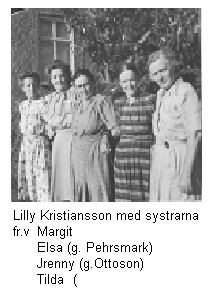
Father Algot Christiansson was a stonecutter by trade, and together with his brother Sten they rented a quarry in Skrea, a small town south of Falkenberg. The main product was paving stones, so-called "löss", which before the era of asphalt constituted the main street and road surface. They also took other commissions, e.g. stonework for the railway bridge over the Ätran in Falkenberg was done by Algot and his brother Sten Kristiansson. Mother Lilly was a housewife, one who in later statistical descriptions could be characterized as: "has 6 children, does not work."
When electrification began to make its entrance, a power station was to be built, and the family moved to Gällared, where a hydroelectric plant was to be built on the Ätran River. The work there lasted a few years, and with the move I had lost all my playmates and schoolmates.
When I was very small we lived in Heberg in a little house between the railway and the river, and I slept in the bedroom with Mama and Papa while the other siblings slept in the kitchen. We had two rooms and a kitchen. One room was solemnly called the dining room. There we had our meals, and Mother Lilly was always very anxious that everyone should get good food. Grandmother often thought that:
- The men should have good food because they work, to which Mother Lilly replied:
replied:
- The children should have good food because they are growing. Compared to some other
families we knew, we always had a nutritious diet. We children always got a pork chop each; there was no question of sharing those among the children. Whether it was due to Mother Lilly's good food or good genes, all the children lived to a fairly old age. Ruth died 1996-09-16, Sonja 199-01-25, and Torsten 1999-02-15. Sister Birgit and brother Rune are still (2005-05-09) alive and seem to be doing fairly well.
The room and the kitchen were about the same size. We had wood heating and it was cold in the winters; Mama got up early in the mornings and lit a fire in the kitchen stove while we stayed in bed. We also had a tiled stove, but the stove heated up quite well; we closed the doors to the bedroom and the kitchen.
In the mornings we had breakfast with porridge, but I didn't like it so I got gruel; I liked oatmeal gruel, while the others got oatmeal porridge. I was 5 years old when we moved from there to Heberg's community center; Papa got the position as caretaker there. The community center was located higher up in the village, above the railway and above the road and the railway. I remember the move well; I was carrying a little chair or stool and had to cross the semaphore lines at the railway; I helped as best I could. It was the four youngest of us who moved in there: me, Birgit, Rune, and Torsten. Sonja and Ruth had already left home and were working.
The community center was a large house. The lower floor consisted of a party and meeting hall, and on the upper floor there was a residence and (when needed) a coffee shop. There was a long and fairly wide corridor to the east and two rooms at the far end, one of which was called the club room and the other was a kitchen; the corridor was wide enough that there were coffee tables. From the stairs to the left there were two rooms – our residence. In the summers we could also use the club rooms, which were intended for meetings.
The primary school was in a school that lay between Heberg and Årsta so that the children from both communities would have an equal distance to walk. The "big school," as it was called, where children went from 3rd to 6th grade, was a couple of kilometers from Heberg. We went from the 3rd grade – two years in each grade – two in the morning and two in the afternoon, four grades in all.
Among my schoolmates were Holger Alm – the gardener's son, he lived above the community center and used to pick me up. Then we walked to school. Then there was Maj who lived on the other side of the railway, as well as Mina and Emil Karlsson, whose father was a carpenter, and Asta whose father was a station clerk. For the most part we had company to school. Often Olle would also come along – he lived at the far end of the village, by the dairy.
The teacher in the primary school was young, and I think she had Rune in first grade; in third and fourth grade we had Anna Eriksson, and in fifth and sixth grade we had Holmers. I don't remember what his first name was. Maria asks what you called the teacher. - Did you say "fröken" or "magister"? - I don't remember.
The older ones scared us with Magister Holmers, we were so afraid of him even before we got into those classes. But he was kind, so there was nothing to be afraid of. He naturally had a number of rascals among his students, so he had a rattan cane by the blackboard. I remember when we had a lesson with Anna Eriksson in the third and fourth grades, the boys who were under Holmers were playing with a mirror and reflecting sunlight into the teacher's eyes. She went and complained to Holmers, and he came rushing out with the cane, but he couldn't catch them because they hid in the outhouses, but I think he yanked the door open and dragged them out so they got a beating.
Some boys got into trouble. At the general store there was an iron post where the farmers could tie up their horses, and one winter a boy decided to lick the post. There was quite a commotion before he got his tongue free. During recess we played hide-and-seek, tag, and brännboll; we probably had jump ropes too. We had a longer lunch break. I remember getting a ball in my eye; I was probably standing too close to the thrower, and he threw the ball so that my glasses broke.
I was the youngest in the family; my brother Rune and I probably didn't do much mischief. We were forbidden to play in the lumberyard, but now and then we slipped in; it was exciting. Ruth and Sonja were older and had moved away from home, had work and earned their own money. Ruth has always been somewhat melancholic and not particularly keen on pranks, but when Sonja came home, there was life in the house. I remember one time when the parents were away and Sonja was home. We had home cinema. A sheet was hung between the kitchen and the living room, a lamp was lit in one room, and we sat behind the screen in the darker room. The show consisted of playing with the cat, tossing it from one to the other, and the shadow flew across the sheet. When Sonja came home, toffee was almost always boiled. We emptied our piggy banks, Birgit and Torsten were sent to the grocery store to buy the ingredients, and Sonja prepared the mixture. It took time to boil. Torsten was somewhat impatient, stuck his finger in the hot mixture, burned his finger, and started howling. We called him "the sanding disc."
The solidarity among the children was very good; everyone had to join in the games. When the river was frozen, we skated there, but only after an older man, Anders, had checked the ice. There was a small stream that flowed into the river, and there the ice was weak and thin. Torsten was about 5 years old when he fell in, and they found him frozen through in front of the community center; he didn't dare go in.
One day, when the ice was safe, we decided to skate to Boberg. I was only 4-5 years old, and Rune had to drag me along; he was very kind and helpful, liked by everyone for his fair manner. Often, however, I had to go first. I remember when Mama took us to a photographer to have our pictures taken. The photographer wanted Rune, who was older, to be photographed first, but that didn't work. Only after I had been photographed did he dare to join in.
My brother Torsten and our cousin, Uncle Sten's boy Kurt, occasionally got up to real mischief. Heberg is a station where freight trains sometimes stood parked on a siding. One day Torsten and Kurt had taken the opportunity to remove all the destination tags from the cars, the kind that were placed behind a little grille on the freight cars. When the train arrived in Slöinge and the cars were to be sorted for further transport, nobody knew which car contained what, nor where the cars were to be sent. There was a big fuss; no one knew who had removed the tags, but they found Torsten and Kurt each by their own pile, which they were busy sorting. Father Algot was not one to beat his children, but that time Torsten is said to have gotten a thrashing.
When the boys grew up, they began working with their fathers in the stonecutting trade and mostly spent their time cleaning curb stones and "löss." They were dissatisfied with the pay and went on strike. After "union negotiations" they got 1 öre more per "lus."
I had a lot of trouble with my eyes when I was little; it was only when I got to third grade that the teacher discovered it, because she herself wore glasses. Yet we had been examined, but Doctor Hellström was called "Doctor Helpless," and he didn't detect any vision problem in me despite the fact that I saw so poorly. The doctor got a piece of his mind when the teacher was at his office and gave him a thorough scolding. My first glasses were –3 diopters, but the doctor hadn't seen that. I sat in the front row and had a small blackboard all to myself, but I couldn't even see that, so poorly did I see. When Mama and I came out from the optician – I remember this – and I had gotten the glasses: - Ooo, Mama, how bright and beautiful everything is, I can read the signs!
I thought everyone saw that badly.
- In the winters we had a good time in Heberg, you know what it looks like there? From the railway station and across the road there was a hill, and a bit further, a couple of blocks away, there was also a hill, and there we went sledding and riding a kick-sled. We always had someone standing watch on the road, even though there weren't many cars. The constable lived nearby, and it was probably he who had prompted us to take certain safety measures. We rode right across the road.
There weren't that many cars in Heberg; there was the shopkeeper (he had a square thing, probably a Model T). It wasn't really much for transporting goods since most goods came by railway and the station was close, right across the road. The dairyman also had a passenger car, as did the priest Severin, who came driving from Årstad. He had both a car and a chauffeur. Priest Severin was big and fat; he would come driving to pick up the mail at the railway station. The old ladies would stand up and curtsy almost to the floor when he arrived, but he never saw them. He was a real snob; he came to school graduations and exams, but never said a word to the children. He was a truly sanctimonious priest. - Did you go to church? asks Maria. - No! The church was about three miles away and Heberg didn't have its own church; Årsta and Heberg formed a parish. Skrea probably belonged to Falkenberg. Slöinge and Getinge went together. My parents weren't religious enough for it to bother me. When I was 5 years old, we moved to the community center, but then my father, Torsten, and my uncle Sten got work in Gällared where a power station was to be built. It was 30 km inland and we moved up there. So I attended 6th grade in Gällared. There were no children there; the community was very spread out. There was one child I played with whose father was a farmer and "something" in the municipality; her name was ..... and it was with her that I spent time during that period. She was the only child nearby.
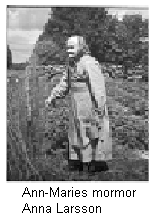
In 1937, the work in Gällared ended and we had to move in with Grandma and Grandpa in Skrea – into one room and kitchen; they only had two rooms and kitchen. That year I went to school in Skrea. It wasn't always fun. Grandma and Grandpa weren't difficult, but Aunt Anni was the one who decided and caused trouble. Grandma became very stooped in her old age. She was out in the forests, picking berries and mushrooms; she had a strawberry patch and sold strawberries at the market. She also had Bojan and Gullan. Bojan was a dog and Gullan was a cat. Bojan was a little pug and he followed Grandma to the station when she went to the market in Falkenberg. When she had left, Bojan went home, but when Grandma was supposed to return, the dog went to the station to meet her. How he knew the times is incomprehensible, but he probably had some sense of it and heard when the train was coming. Grandpa was also a stonecutter. He worked until retirement, but he had a weak heart and wasn't supposed to work so hard. He probably didn't have much say in the house; Grandma was the one in charge. Both Grandma and my maternal grandmother grew strawberries. At maternal grandmother's, we could eat as much as we wanted, while at Grandma's it was a bit stricter. She was a businesswoman, sold strawberries at the market, and for us children she picked ones that weren't quite large and top-quality. She also went into the forest in the autumn, picking berries and mushrooms for sale. For company she had the dog Bojan, a pug, and her cat. When Grandma took the train to Falkenberg, Bojan accompanied her to the station and then went home.
We lived in Heberg, near Aunt Annie, whose husband Gottfried Pettersson had a bicycle repair shop. Through my aunt's husband, I got my own bicycle when I was 12. It was a nice red bicycle in the right size so I didn't have to pedal between the frame. When we were going to Falkenberg, we would stop in Skrea at Grandma and Grandpa's. Grandpa would be there waiting for us to come back. Sometimes the Falkenberg visit took far too long and he would say: - You're good at sending for the dead; you never come back.
When I was little, I got a dog. It was Olle, the dairyman's boy. They had a Saint Bernard and she had puppies. They were illegitimate because the bitch had mixed with the shopkeeper's German Shepherd, and they were going to get rid of the puppies. I remember I was with Mom at Aunt Anni's and I said: - Mom! At Olle's they have puppies; they're going to sell them, can I have one? - Yes, Mom answered, she answered carelessly.
Then we were at Anni's again; she lived in a house next to the main road, and then Olle came with something.
- There comes Olle with the puppy! I called out to Mom. - Which puppy? asked Mom. - But Mom promised! - We'll have to ask Dad when he comes.
We had a cardboard box that we put the puppy in, right in the middle of the kitchen floor, and I hid behind the counter when Dad came. He couldn't say no. I got to keep the puppy, and it grew into a big dog, almost as big as a German Shepherd. The dog was named Ronny and became a very pleasant playmate for us children. Like most mixed-breed dogs, she was very clever. (Ronny was a mix of the shopkeeper's German Shepherd and the dairyman's Saint Bernard.) The dairyman's dog had the task of fetching the newspaper from the station and went there along the main road, but the return trip was along the railway to avoid being disturbed by other dogs.
Among other things, we played hide-and-seek where the dog was allowed to join. Someone held her (she was a bitch despite the name) while we children ran and hid. When the dog was let loose, she searched us out and then there was no end to the joy. She almost knocked us over in her delight at finding us. However, she didn't like tramps. There were still such people in the 30s and 40s. She had her place by the stairs, and when an unknown stranger came, she let the person into the hallway, but then it stopped. When the stranger would take a step into any of the rooms, she growled and raised her hackles.
When we moved to Gällared, we couldn't keep the dog; we only had one room and kitchen. My father and uncle had the blasting and all the stone work there, and we had to move to Grandma and Grandpa's and have a one-room apartment there. Now it was time for me to attend continuation school. It wasn't a secondary school; we had a few weeks of theory, then it was household work that was to be practiced.
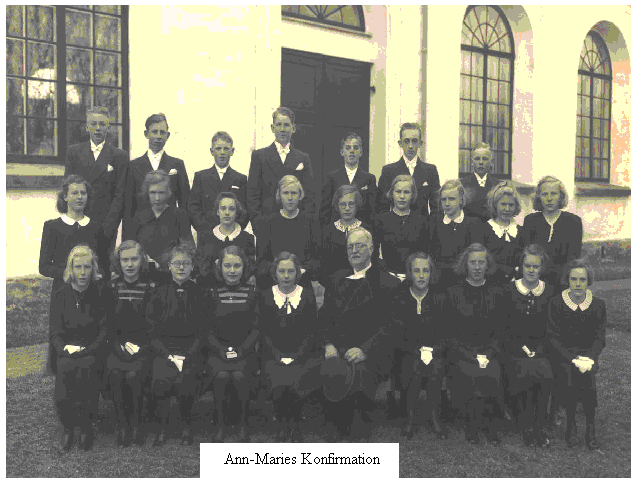
After confirmation, I started working for Gertrud Svensson in her flower shop; I must have been 15-16 and was to be an errand girl. It was through "Räva-Jenny" that I got the position with Gertrud. "Räva-Jenny" worked as a cook for fancy dinners at the well-to-do families in the Falkenberg area. She had a somewhat dubious reputation and was the mother of twin girls of the same age as me, as well as another girl who was slightly older. Someone asked her about how she could have children even though she wasn't married. - One can certainly have children without being married, replied Räva-Jenny.
I spent a lot of time with her one twin, Margareta, who worked in Falkenberg in domestic service, and she probably found out that Gertrud needed an errand girl and that I was at home without work. In the beginning it was very troublesome; I wore glasses, but my eyesight deteriorated very quickly and the other employees made fun of me; it wasn't very kind. I always wanted to know what the house looked like; I couldn't read the numbers on the houses. At first I had company with Margareta; we cycled into Falkenberg, but in the winter Gertrud thought it was too cold and then I got to stay with her. Gertrud was kind so it worked out. Gertrud had her parents in Växjö, but she called my parents "Mom Lilly" and "Dad Algot"; she probably considered my parents' family as her second home. At first I lived with her on Rådmansgatan, in a two-room apartment, on the way down towards the beach, and I didn't have to cycle back and forth to Heberg. I didn't have many girlfriends, so I often went home to my parents.
At age 18, I caught a severe flu. At first I was at Falkenberg Hospital. There they couldn't figure out what it was; it was so bad that I couldn't stand on my legs. I probably caught a cold when Gertrud was visiting her parents in Växjö and I was alone in the shop with the errand girl. I had such pain that I was on my knees in the workroom. My whole body ached. They called Gertrud and she came home, but not until the next day. I went to Mom, got brandy and Albyl, but the next day I still had to go to work in the morning. Gertrud couldn't come back that quickly. Eventually I was transferred to Halmstad Hospital, where I lay for several months. Afterwards I couldn't walk and couldn't work in the shop, so I had to stay with Gertrud. I saw various doctors and they determined that it was some nerve in my back that was acting up. In the summer I was supposed to exercise as much as possible: swim and cycle.
There were many who bought flowers from Gertrud; she was very skilled at making wreaths and her shop enjoyed great popularity. As competitors we had Törnrosa Flower Shop. I was convalescent for a very long time, and then I was going to try to retrain, but for that more schooling was required, which meant a couple of winter courses at Katrineberg Folk High School. After completing these courses, I was accepted as a student at the map-drawing school in Gothenburg, at Valand. I was about 20 when I started at Katrineberg; I don't remember exactly. At 22 I met Albert. I had taken one winter course before, then I continued with the summer course and another winter course; it was then we met. We studied the same subjects. Folk high schools at that time were good continuation schools for people who wanted to go further. We studied chemistry, physics, history, Swedish, mathematics, English. When one had been diligent and studied properly, one got grades. As our principal we had Thorsten Åberg, who had written some textbooks in both religious and regular history. As teachers we had: Mr. Åkesson – math and history, Mr. Orring – Swedish, Mr. Lundquist – chemistry and physics, Nils Palm - Swedish, literary history, Miss Hessling – Swedish and German, Miss Svedberg – gymnastics and health issues, etc.
Mr. Lundquist had a doctorate in chemistry and his dissertation topic had been about rocks. All doctoral dissertations are published, and he told us that two copies had been sold – one of them, however, by mistake to a Norwegian who had confused the names of him and another doctor.
In the autumn of 1949, I started a map-drawing course in Gothenburg, at Valand. I used to go up to Gothenburg on Sunday evening, worked at the school until Wednesday, and then went home on Wednesday afternoon; most of the schoolwork was done at home. During the days I was in Gothenburg, I stayed with my sister Sonja; she had a three-room apartment at Träringen in Björkekärr. Life became a bit complicated both because of the travel and because a child was on the way. It was time to get married, and at the end of 1949 the wedding took place in Falkenberg, with a wedding party for the closest family and some school friends.
When the course was finished, our son Tomas was born. The last period before his birth was somewhat difficult with schoolwork. I had to perform certain tasks in cartography and was sometimes disturbed by his kicking in my stomach. After the child's birth, there was no question of working for a while. My parents and Gertrud had to take care of me. I stayed with my parents and Gertrud until 1953-04-01 because we did not have our own home. Albert worked in Borås at Mjölkcentralen and he had seen an advertisement in Borås Tidning that the City Planning Office there needed a female cartographer. I sent in my documents and was hired. There was a move to Borås and, lacking our own home, we had to lodge in Albert's old room rented from Mrs. Holmquist, sleep in a folding single bed, and it was not until 1953-10-01 that we got an apartment of our own. It was a shared-ownership apartment for 800 kronor, one room and kitchen, at Kyrkogårdsgatan 5 in the Göta district. It was a brand-new building with all the modern conveniences of the time and with a bathroom in the basement.
As long as we lived together in the rented room, we could not have Tomas with us, but as soon as we got the regular apartment, I took him to me. At first he was to be at the daycare in the old premises of the Weaving Company in the Järnbäraren block. The first days went reasonably well, but then he began to protest and gradually we had to change daycare. It was in Göta. There it was somewhat calmer and after a while he adjusted relatively well, but it cost tears and trouble from both sides. When I had to leave him, he ran along the fence like a little dog, crying and screaming. I did not feel well after such goodbyes and called the daycare when I got to work to ask how he was. - Yes, there's no danger with him. He's playing with the other children.
It turned out eventually that he only screamed as long as I was within sight; then everything was as usual. Once later I also called the daycare to ask how it was going, and the director said:
He is sweet, but how he swears! He is sitting here hammering a nail into a
He's kind, but how he swears! He sits here hammering a nail into a board, and with every hammer blow he cursed loudly and clearly! I sat there like a question mark. Albert never swore, and neither did I, but when I thought back, it was that Tomas was at my parents' house, and father Algot swore quite a bit. That was probably where he had learned the language. He probably had no understanding of the meaning of the words and just repeated what he heard others do. Another example came when, after a day at daycare, he started singing to us:
……the boat begins to roll and the people begin to kn.....a….
We had difficulty keeping from laughing, but managed somewhat and explained to Tomas that we did not want to hear that song anymore. Since then we have not heard him swear at all.
In the autumn of 1953, Albert left for Köping Technical Institute and was away for three long school years, except for the major holidays and summer breaks. I struggled on with work and with Tomas's croup, and there were many restless nights for me. Every single time there was bad weather and he caught a cold, I could count on having to get up at night and "steam" him. I had to rig up a sheet over his crib, turn on the kettle and lead steam in to him, it was the only way to reduce the swelling in his throat. Sometimes the little kitchen was so damp that it dripped from the walls. Only when he was about 10 years old did it become somewhat calmer.
When Albert finished his engineering degree, he worked for six months at the Swedish State Railways Telegraph Office, then did his military service in Gothenburg, so we did not see each other very often after all. It was only in 1958, when we got a small apartment in the factory area in Hägersten, that we could move in together "for real". Since then, living together has gone somewhat better.
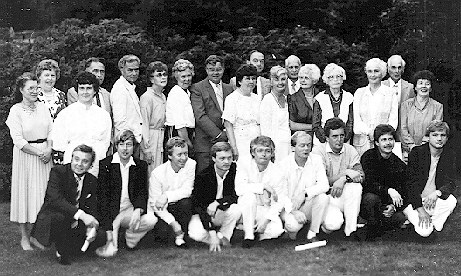
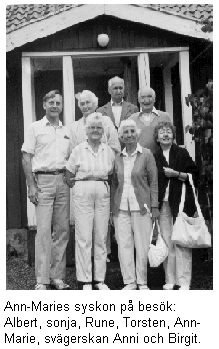
Cousin gathering at Abild's heritage museum year ……….
| Born | Deceased | |
| Algot Kristiansson | 1892-07-23 | 1976-06-30 |
| Lilly Kristiansson | 1892-07-11 | 1983-11-02 |
| Wolmer Bergh | 1912-03-06 | 1997-08-02 |
| Ruth Bergh | 1912-07-19 | 1996-09-16 |
| Håkan Bergh | 1942-11-04 | |
| Göran Bergh | 1946-10-12 | |
| Christina Bergh | 1946-10-12 | |
| Sonja Sandquist | 1914-10-01 | 1999-01-25 |
| Sandra Björck (Sandquist) | 1940-03-03 | |
| Björn Björck | 1937-05-27 | |
| Hanna-Lena Björck | 1965-09-13 | |
| Felicia Björck | 2000-03-09 | |
| Torsten Kristiansson | 1917-07-31 | 1999-02-15 |
| Annie Kristiansson (Almén) | 2002-12-19 | |
| Karl-Åke Kristiansson | 1937-10-02 | 2001-01 |
| Birgit Johansson | 1919-10-16 | |
| Kalle Atterling | ||
| Susanna Atterling | 1944-02-05 | |
| Madeleine Fransson | 1952-07-23 | 2006-09-19 |
| Rune Kristiansson | 1921-03-21 | |
| Albert Kronberg | 1928-08-08 | |
| Ann-Marie Kronberg (Chris.) | 1925-04-01 | |
| Tomas Kronberg | 1950-04-23 | |
| Maria Kronberg | 1958-06-08 | |
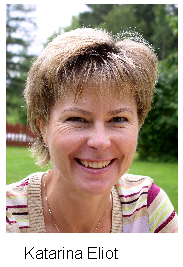
| Katarina Eliot (Kronberg) | 1963-02-04 | |
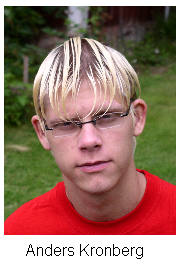
| Anders Kronberg | 1984-11-28 |
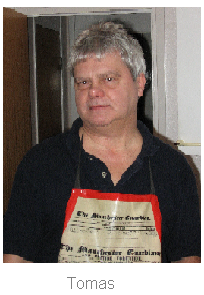
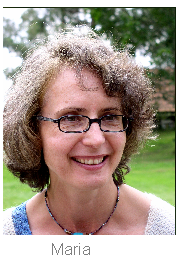
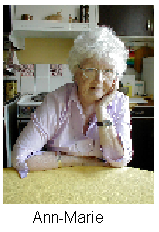
Recordings
- 051226Anders.mp3
- 051226Maria.mp3
- 051226Tomas.mp3
- 070719 Tomas läser.mp3
- AMtalar.mp3
- Ann-Mari.mp3