Conscription in Gothenburg 1957
Every country has an army, its own or others'.
Theengineering education was clear, but during the winter papers had come from the military authorities that I was to report to I 15 to be enrolled for military service. I had been a Swedish citizen for a couple of years and with that dignity also followed some less pleasant obligations. I had applied for deferment and been granted it as long as schooling lasted, but now it was no longer possible. There might have been certain possibilities to delay the matter for a couple of years, after age 30 I would only have been called up for refresher exercises, but I thought it was just as well to struggle a bit more and become a so to speak full-fledged member of Swedish society.
At the enrollment at I 15 the enrollment major wanted to place me as an armored soldier. I pointed out that it did not suit me so well if one were to go by the motto that the defense forces had begun to advertise. "Right man in the right place". Possibly I could start at the Defense Forces' Interpreter School, they said to me, after the military authorities had looked through my papers and noted that I, in addition to a Swedish school, had also attended both Soviet and Finnish school. The Military Interpreter School was to start its operations the same year in Uppsala, but I felt that I had been away far too long from the family and had no desire to spend an additional 15 months (the interpreter training was extended) in Uppsala, where the Interpreter School would lodge in the Ast/Und premises on Hammarskjöld's road. The Cold War was in full swing, everything Russian was little popular and I was "fired up" about technology, TV and everything new and interesting in the field. I had absolutely no great inclination to study Russian full-time in that situation. As the situation was, it seemed to be of little value to take an interest in the Russian language. That I later still had much to do with Russian and the Army's Interpreter School: sometimes as a teacher in Russian naval terminology and sometimes as a general language teacher, is another story.
Now I thought that I had fought through the technical education during the strenuous three years and wanted to get at least something useful out of military service. I had no desire to run after armored vehicles in rugged terrain, I was also older than the others and thought that even I could make certain demands on the defense. I requested to be sent to the Radar School at Käringberget in Gothenburg, but it was not granted. A transfer I did get, however, and it was to the Coast Artillery KA 4 in Gothenburg. KA belongs organizationally under the Navy and there the enlistment takes place at the beginning of the year - on January 7. I took work as a trainee at the State Railways Telegraph Engineering Office in Borås and practiced there for the remaining part of the year 1956.
The work was not burdensome, I got to deal with all aspects of railway communication and sometimes there were trips to more remote track sections. Växjö was one of them and I visited there with Harald Wretmalm, first tele engineer. Växjö in its day had three different track gauges: the normal one with 1435, a slightly narrower one of about 800 mm, and another proper narrow-gauge railway. Elsa Rytterström, one of the nice serving girls at Odenryds in Köping, had married and moved to Växjö and I visited the couple. She had gotten hold of a real velvet-eyed sheik and the family had been expanded with a son. She seemed to be doing quite well in her role as a housewife. In Köping she had a somewhat wild reputation, whether that was true in reality I don't know, she was happy and lively - people talk so much.
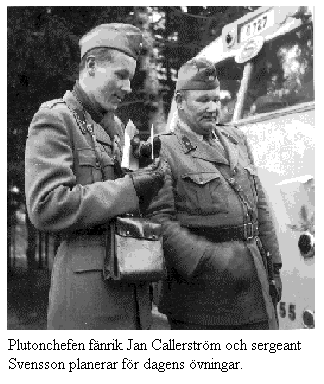
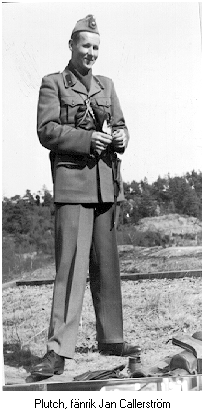
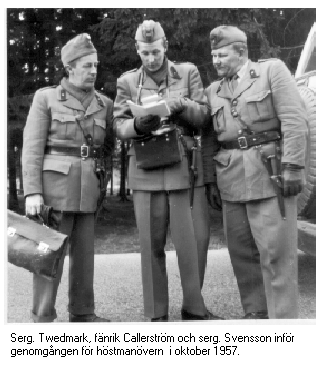
At the beginning of January 1957 I went to the reporting station Käringberget, KA4 in Gothenburg. Now I was to become a coast artilleryman and learn to shoot with the really big cannons. The "Big Cannons" among the officers were Captain Engwall, Lieutenant Jan Callerström. The training personnel included Sergeants Twedmark, Svensson, Svedmark, Olsson and Corporals Mårling and Martinsson, as well as Flag Junker Dellheden. The training concerned 155 mm fixed coastal batteries placed here and there on the islands of the Gothenburg and Bohus archipelago. Even there I tried to push to be selected for some more electronic task, but it was no. It didn't help that I went to the regimental commander, Colonel Lange, and spoke with him. Neither he nor the training major had any understanding of my situation. When I asked if they didn't need people versed in electronics, they answered evasively and after a while of palavering I realized that it was my foreign origin that was the obstacle. I asked them directly if that was the case, and the gentlemen looked somewhat embarrassed. I was selected for fire control and searchlight duty.
In 1957 we still had some searchlights left, silver-plated parabolas with 1.5 m diameter and a carbon arc with several kilowatts of power. The entire installation was driven by a mobile power unit and was served by a squad. The only time we used these searchlights for any longer period was during the Defense Exhibition on Heden in Gothenburg in the autumn of 1957. Unfortunately it rained and since the searchlights were old and the seals leaky, water ran into one of them and the mirror cracked. I had to write a report about it to the regiment.
The KA4 regiment lay toward the coast, the number 9 tram went from Järntorget to Långedrag and during the time we were stationed at the KA4 barracks, you got off at the stop Käringberget, later (when we were on Styrsö) the end station became Långedrag. The longest wait was always at Järntorget, but on the other hand there was always something to see: drunkards, bootleggers and flighty girls. The well at Järntorget was a known bootlegger's nest, if you wanted to get a bottle of "something" you just put one foot on the well's edge and a seller would appear. Those who were not sufficiently familiar with the square's and especially the well's function and knowledgeable about its reputation could sometimes stand looking into the well with a foot on its edge. The seller appears and asks:
- What kind do you want?
- What? I don't want anything, the ignorant one could answer.
- What the hell are you standing at the counter for then?
The basic training went fairly quickly. We did it under the leadership of Corporal Mårling and Sergeants Svensson and Olsson.
The trips home were mostly by train, but in summer I sometimes managed to hitchhike. There was a Borås wife from society class I who often drove by in her own "Folka" on her way home from the Askim beach. On several occasions I could ride with her and get to Borås in a somewhat faster way. The wife had to be home before 6 PM and cook for her husband. However, most trips were by train. In one of the Gothenburg regiments, there were boys from the "traveling people" in service, and at the beginning of 1957, throughout the winter there were a couple of tents set up just before the entrance to Borås, at Aplared. That the tents were inhabited could be seen from the light inside them. A couple of times there was a stop near the tents, someone or ones had pulled the emergency brake and shortly after a couple of young conscripts could be seen heading towards the tents. They thought it was too far to walk back from Borås Central Station to the tent site.
I had "turned my heel" already in the Finnish Army at the 2nd Jaeger Regiment in Far Karelia, so there was nothing directly new for me regarding the military drill with "right and left turn." Some individual weapon (submachine gun) was unfamiliar to me, but on the other hand no one would want to go to war voluntarily with a Swedish submachine gun of the old model. It had some ingenious gas channels and was a pure "fair-weather weapon." The first time you had to take cover and throw yourself down with the submachine gun in muddy terrain, it would stop functioning. It was also removed from the arsenal already in my time.
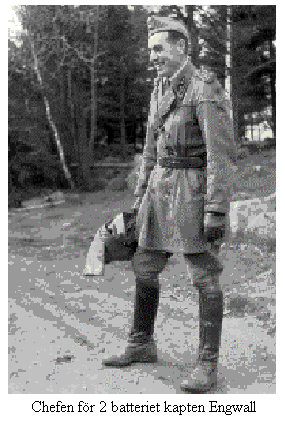
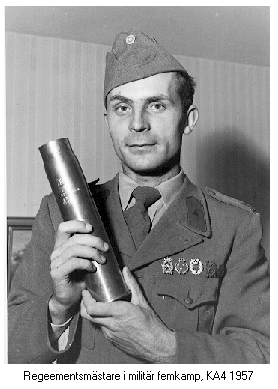
The first part of the training took place at Käringberget, but at the beginning of April we were to go out to the archipelago and the 2nd battery (to which I belonged) sailed under the command of Captain Engström out to Styrsö, where there were fixed coastal fortifications that we were to serve. The service on Styrsö was pleasant, we practiced shooting with the 155 mm cannon (with 40 mm insert barrel). I was older than the Scanian and Bohuslän conscript comrades, was in good standing with the officers, and often got some odd tasks. When we were still in the barracks on the mainland, I participated very actively in military pentathlons and had the Crown's free ticket to Valhalla Baths, which had just been completed and taken into use.
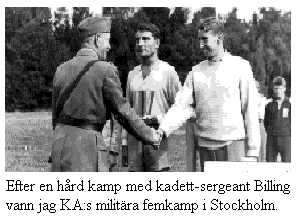
The sports officer Captain Olsson arranged a free ticket for me, he liked that I fought for KA4 in the various competitions. We were a fairly strong team from the regiment and won the KA championship at I1 in Stockholm in competition with other regiments that year. I myself won the individual championship and got a few days of extra leave as a reward.
When we had moved out to the "summer work" on Styrsö, the training opportunities became greater, but also more difficult. The island is one big pile of rocks and the track we had to run did not have many meters of flat terrain. The most comparable terrain I encountered at the Källvik camp in Bohuslän. It was rocky knolls, ravines and slopes – up and down.
My toughest opponent was cadet sergeant Billing. When he talked about the upcoming competition, it seemed as if there was no point for the rest of us to even think about ending up on the winners' podium. His strongest event was obstacle swimming, and I decided that he wouldn't have his possible victory handed to him too easily. It went as it went. He won the swimming, but I was better at shooting, hand grenade throwing, and the obstacle course. The fight was tough and took its toll. After struggling through the obstacle course with its twenty or so more or less strange obstacles, I vomited from overexertion for the first time in my athletic career. In addition, the rope ladder element cracked one or two ribs – for several years afterward I had difficulty turning over in bed. You always have to pay a certain price when you're going to do the obstacle course in just over 3 minutes.
On Styrsö, for a while I "played" at being a swimming instructor. I had taken a course on the subject during my stay at Katrinbergs Folkhögskola in Halland in the years 1948-50, and now that knowledge came in handy. At the same time, I finished swimming the "Simmagistern" [Swimming Master's certificate]. There were a few young men who wanted to enlist in the Coastal Artillery, but they couldn't swim. One of the prerequisites for being accepted into the regular non-commissioned officer service was being able to swim. I was ordered to try to teach them the art. Three out of five learned; the other two could swim, but only as long as I had the loop on them. As soon as I removed the support, their arms started flailing like lark wings, and the result was that they nearly drowned. They never got over their fear of deep water.
Now and then we got sea duty. It consisted of sailing out from Nya Varvet with an old whaler, "V5", converted into a target towing vessel. The "V5" was one of the most unpleasant ships you could be out on. It was a round-bottomed craft, and it was not far from rolling even in the harbor basin at Nya Varvet, not to mention when we got outside Vinga. We were a seasoned crew and got along well, but sometimes they sent a reserve officer out with us as troop commander, and all too often it happened that this poor fellow had never been to sea before. I particularly remember a reserve lieutenant who came on board with the intention of commanding the target designation troop. It went well until Vinga; he was quite bold, ordering us here and there, but outside Vinga the sea grew quite rough and the boat began to roll heavily. The weather was on the borderline of it not being worthwhile to go out with the target (it sometimes disappeared in the wave troughs). Pretty soon the poor man began to feel sick and couldn't command. After hanging over the railing for a while and throwing up the contents of his stomach, only bile remained. His subsequent fate on that voyage was to lie down under the bridge wing and spend the rest of the sea duty there. He was our commander, so we tried to be nice to him, but the crew of the tugboat teased the landlubbers. Now and then, someone from the crew would come up to the lieutenant and say with feigned friendliness:
- Would the lieutenant like some food? We have brown beans with pork today. Very good and fatty!
With travel time out and in, and taking in the towing cable, it could amount to nearly 10 hours of sea service. His memories of Coastal Artillery service as a troop leader at sea are probably not the brightest.
Other competitions besides military pentathlons were also organized. The training included that each battery would field a team for a rowing competition with the navy's 10-oared cutter. It is a fairly seaworthy but heavy and sluggish longboat.
The start was at Nya Varvet; we were to row out to Vinga, switch boats, and row back. We didn't have much practice rowing in the gun and fire direction platoons; at the start we tangled the oars, and to begin with it looked like a storm-twisted forest next to the boat's gunwale. By the time we had managed to sort out the strokes and began to row properly, the engineers had pulled ahead of us by more than a boat length. They were out day after day, busy with mine laying as they were, and naturally had much more training than us. Besides, most of them were fishermen's boys from Skåne, Bohuslän, and Halland, accustomed to the sea since childhood. Our boat crew came in a good second place anyway, but at the finish line it felt like our wrists were about to break. The skewing [rowing with oars on one side only] was part of the competition and made it extra tough for those of us who were only used to rowing inland lake boats with fixed thole pins.
Once in a while we happened to stay on Styrsö over the weekend and stand guard. The task also included some cleaning of the small officers' mess, which was housed in its own barracks. I had the watch together with the bugler and the musician, accordionist Nilsson from Helsingborg. We could pass the time by making music and singing. Nilsson was fond of taking a schnapps, and when we came to the officers' mess, he went up to the bar cabinet and began studying the logbook, in which markings were entered for the number of snaps each officer had taken. He studied the book carefully and stated:
- Our platoon commander, Ensign Callerström, hasn't had a single schnapps yet, but that will soon be remedied. Nilsson poured a decent schnapps, then another, wiped his mouth and said:
- Now he's finally become a real man and got a couple of schnapps under his uniform – and drew two lines in the logbook opposite the platoon commander's name.
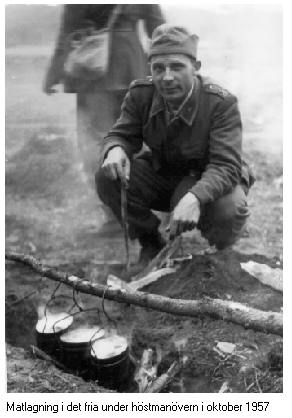
Towards the end of the training period,, i.e., from the first days of October up to the 25th of the same month, we were to have so-called application exercises. The jungle telegraph had already spo-ken about certain surprise elements being built into the exercises. For instance, it could happen that our barracks were bombed out and we would be forced to move into tents. Then came D-Day. The weather service had predicted increasing wind strength; it was expected to blow up to storm force, and already in the morning the wind speed was up to 15 meters per second; as time went on, it began to howl worse and worse around the corners of the barracks.
At the morning formation, the various tasks were assigned, and those of us who were in charge of the searchlights were told that Måvholmen (a small skerry) would be the location for our military activities during the application exercise. We were lucky, in other words; except for Silver (431 Gunnar Nilsson), he had the misfortune of being ordered to kitchen duty just that day. The best thing that can happen on a maneuver is to get out onto a lonely islet, preferably without any officer at all, as in this case. The group leader, Vk Gundehag, was in command of us. "Us" – that was 523-Andersson, 555-Johansson, …Theander, "Lillen", and me, 2090. We were happy to get out to Måvholmen; there we would be largely left in peace from the "war". While the others might eventually have to move out into tents, we would lie in our nice, warm barracks, nice and comfortable.
In the morning we went out with the fishing boat "Elvy"; it was blowing hard, and according to renewed reports, the wind strength would increase further – to 25-30 meters per second. The first stay wouldn't be long; we were only to make certain preparations and then return to the quarters on Styrsö for lunch.
- Now you're going out to prepare for close combat, said Ensign Callerström with a suppressed smile; he knew all too well that we wouldn't do much more than tidy up in the barracks.
Arrived at Måvholmen, we divided up the beds and had quite a bit of trouble getting the stove lit. In the barracks there was also a kitchen, but the stove there was not in such condition that it could be used for a fire; most of it was so rusted that no lighting was possible. Before we returned to Styrsö, we stuffed the stove full of wood and hoped it would still be reasonably warm when we got back after lunch. The wind increased, but despite the approaching storm, we were transported back to Måvholmen; the war was not to be interrupted just because of bad weather.
Before departing from Styrsö, we provided ourselves thoroughly with provisions; bread, cheese, butter, sugar, and many other odds and ends. All this was to be a supplement to the reserve provisions, consisting of canned goods and other tinned food, which had been placed on Måvholmen in a sealed store. We received a copy of the reserve provisions list so we could study the various dishes that Öf Sundberg had planned to treat us to. There were pan-fried beef patties, meatballs, bilberry soup, and much else in that vein – apparently we wouldn't have to suffer any famine in the coming days. The afternoon on Måvholmen was spent playing cards, reading, solving crosswords, sleeping, and completely ignoring the "war".
Before the evening, the searchlights were to be made ready and it was quickly done, most was already in order from the previous evening, when we were supposed to have had evening duty. However, nothing came of it, the weather was too rough for the towed targets to be able to go out to sea. The waves were high and the targets disappeared in the troughs. Back to the barracks again, to the warmth and calm, which was occasionally disturbed by the platoon leader, Ensign Callerström, giving a short briefing on the situation on Styrsö.
- An A-bomb has exploded on Styrsö and due to the high radioactivity – 250 Röntgen – all activities must be suspended, personnel must not leave the shelter for 24 hours.
The message was received with cheers:
- Great, everyone shouted in chorus, then we don't have to stand guard outside and worry about the attack.
The joy did not last long, however, after a while a new message arrived with the following content:
- The time has been theoretically postponed by one day and all activities resume as normal and according to previously issued instructions.
- We don't care about their "war", let's eat instead, suggested Lillen who usually became both hungry and sleepy first of all. The suggestion was met without protest and the tea water was put on. We didn't have a can opener to get at the pan-fried beef patties, but a good ax does about the same job on such occasions, and soon we had a set table out in the room that was solemnly called the dining room.
It began to get dark. For a while we went out onto the rock to scan the horizon, but everything was calm except the sea. The wind speed had increased to nearly 20 meters per second and the foam flew high over the shore rocks, it tasted salty in the mouth when you swallowed. The wind lashed the rocks and it was with great effort that one could stand upright on the rocks. The lights began to come on at Donsö, 523-Andersson went out to put the shutters on the windows, there was to be total blackout and not a single streak of light was to be seen from the barracks. Then we were not bothered by either telephone calls or radio calls.
The other guys were still playing cards, I went to bed because we were to take turns watching the stove and it was best to be reasonably well-rested so as not to fall asleep during the slow night hours as fire watch at the stove. Fire watch tends to fall asleep, for lack of other occupation during the watch hour one usually fills the stove to bursting with wood, it glows and spreads too much heat so the fire watch becomes sleepy. The others sleeping also wake up, it is much too warm in the barracks and sleep does not last long. One takes off the three top wool sweaters, but afterwards sleep won't return, which is not surprising really, most had slept quite a bit in the afternoon and not even a soldier can sleep as much as he wants.
- Go to bed, I say to Malte Gundehag, who has been sitting up watching the fire, I can sit here for an hour! He was already sitting on the edge of the bed and only needed to lift his legs and land on his side, then he was in his nirvana.
Everything was quiet and calm. The only disturbance, if one could say so, was the howling of the wind in the chimney pipe and the roar of the waves below the barracks window. I went out onto the porch steps for a while and tried to penetrate the darkness with my gaze. At first I saw nothing, but after a while, when my eyes had become accustomed to the dark, I could faintly discern the outlines of Sjumansholmen and Rävholmen, as well as the street lighting from Donsö and the lighthouse at Donsö Huvud. As far as I could see, there were no boats or other approaching danger that could disturb our peace. One usually hears an approaching boat long before one sees it, but now it was blowing and the engine noise disappears in the storm. I went back into the barracks, added more wood to the stove, which by now had begun to cool, and put a pan of water on the field stove to pass the time by boiling some bilberry soup. The wood stove is not designed with the idea that one could cook on it, the kitchen stove was also not usable, and then the only option left was to bring out the "Esbit stove". The heat tablets lie neatly in the "stove" itself, which is shaped like a tin box, you just need to fold up the sides and the stove stands ready. You put in four or five tablets, light them, and after a little while the bilberry soup starts to boil. You pour a generous portion of the soup into the thick porcelain mug, blow on the soup and try to slurp it down. It burns on the tongue, partly from the heat and partly from the sweetness because the soup is heavily sweetened, but it tastes extraordinarily good.
Time passes quite quickly after all, soon the hour is over and I prepare myself for a new sleep period. Before that, however, I wake 555-Johansson, who is to take over the watch. He wakes without too much effort. For my part, sleep does not keep me waiting long – after a while one is both blind and deaf to the outside world.
In the early morning I woke up because it felt cold in the barracks, but couldn't be bothered to care about who had failed with the stoking – fallen asleep during the watch. I looked at the clock and it showed 0400. After having thrown off all the clothes when it was too hot, I now had to find the soldier's coat at the foot of the bunk and pull it over. After a while, 523-Andersson got tired of the cold, got up and lit the stove, soon it was warm and comfortable again in the barracks. Gradually everyone else also woke up and a discussion arose about who had been negligent with the stoking. The investigation showed it was "Lillen". He was supposed to tend the stove from 0300 to 0400, but had not bothered about it and fallen asleep at his post. "Lillen" all too often had an unfortunate tendency to ignore things.
- You didn't get your 10 hours of sleep per day, did you, since you couldn't stay awake for an hour, the other guys scold "Lillen". He is known to need at least ten hours of sleep per day, otherwise he is unbearable, quarrelsome and stubborn. "Lillen", despite his physically somewhat unassuming size, possesses great tenacity and stubbornness. That most small people are stubborn is said to be because they are too small to fight their considerably larger opponents and too slow to run away from them. Therefore they resort to other combat methods and act like the blowfish. When an enemy threatens it, it puffs itself up and becomes so large that even the shark cannot open its mouth wide enough to swallow it.
At 0600 the telephone rang. It was platoon leader Ensign Callerström who wanted to announce that the hostilities are called off and that the entire battery has been given the morning off to rest. We were to remain on Måvholmen and wait until eleven o'clock, when the fishing trawler "Elvy" would come and pick us up, he announced.
However, nothing came of the return trip. The storm increased and later in the day a new message came from the command. The fishing trawler could not go out due to the storm and Måvholmen has no pier to dock at. The skerry is small and offers no protection even on the lee side to be able to dock under adverse weather conditions.
Other complications also arose. On land there was a severe influenza going around, "the Asian flu", and we had apparently been hit by it. The incubation period was over and several of us began to feel unwell. We reported this to the command, but the answer was that they couldn't do anything about it right now, the weather was too severe, the boat couldn't go out and helicopters don't fly in 25-meter-per-second wind speeds.
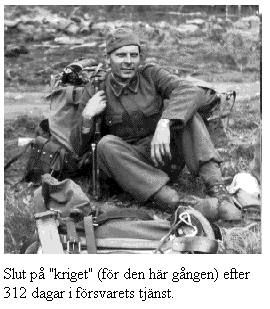
We had to spend a few extra days out on the skerry, the Asian flu did not make the stay there much better. Had we been completely healthy, it would have been just pleasant; after a few days we had received permission to break into the supply of reserve provisions and eat all the good dishes that were there. Now no one even wanted to hear about food, which normally constitutes a major topic of conversation and area of interest for a soldier. In the Finnish army they said "A soldier doesn't feel good until he has eaten so much that he has felt sick". Over the telephone and radio net, the exercise command occasionally inquired about our health, but since no one was actually dying, only nauseous and feverish, we had to stay on the skerry until the storm had abated. When the wind had calmed enough and the waves subsided, the platoon leader called and announced that a boat would come and pick us up. To be safe, we were admitted to Nya Varvet's infirmary for observation and thereby had to serve a conscription that was 4 days longer than the stipulated 308 days, but all's well that ends well.
After the conscript service, I was with my family for the first time in a long while. I sent out a number of résumés: to Vattenfall, Televerket and Nordiska Instrument, all in the Stockholm area. Neither in Borås nor in Gothenburg was there any larger selection in the electronics field.
At one of the large shipyards in Gothenburg worked the scaffolder Konrad. As a workmate he had a negro from Miami whom the friends called Jim.
During a break, Konrad asked the negro Jim.
- How is it that negroes have such luck with our Swedish girls?
Jim grinned contentedly, and his teeth glistened like pearls in his black face.
- Well, boy. He answered, we are not differently made than white men. When we meet
a girl, we kiss her first on the neck, then on the mouth, and again on the neck. Then they become like the banana – edible.
When Konrad came home, washed up, ate and read the day's newspaper, something clicked in Konrad's head. Jim's recipe would be tried. Konrad crept up behind his wife, who was standing washing dishes, kissed her on the neck, then on the mouth and again on the neck. Afterwards the wife looked at her husband and exclaimed:
You have real negro manners, Konrad!
Konrad is now taciturn and brooding.
Recordings
- 1957GöteborgA.mp3
- 1957GöteborgB.mp3
- 1957GöteborgC.mp3
- 1957GöteborgD.mp3
- 1957GöteborgE.mp3