Family visits in joy and sorrow
About trips by car to Russia and Europe you can read in section ”65Bilar”
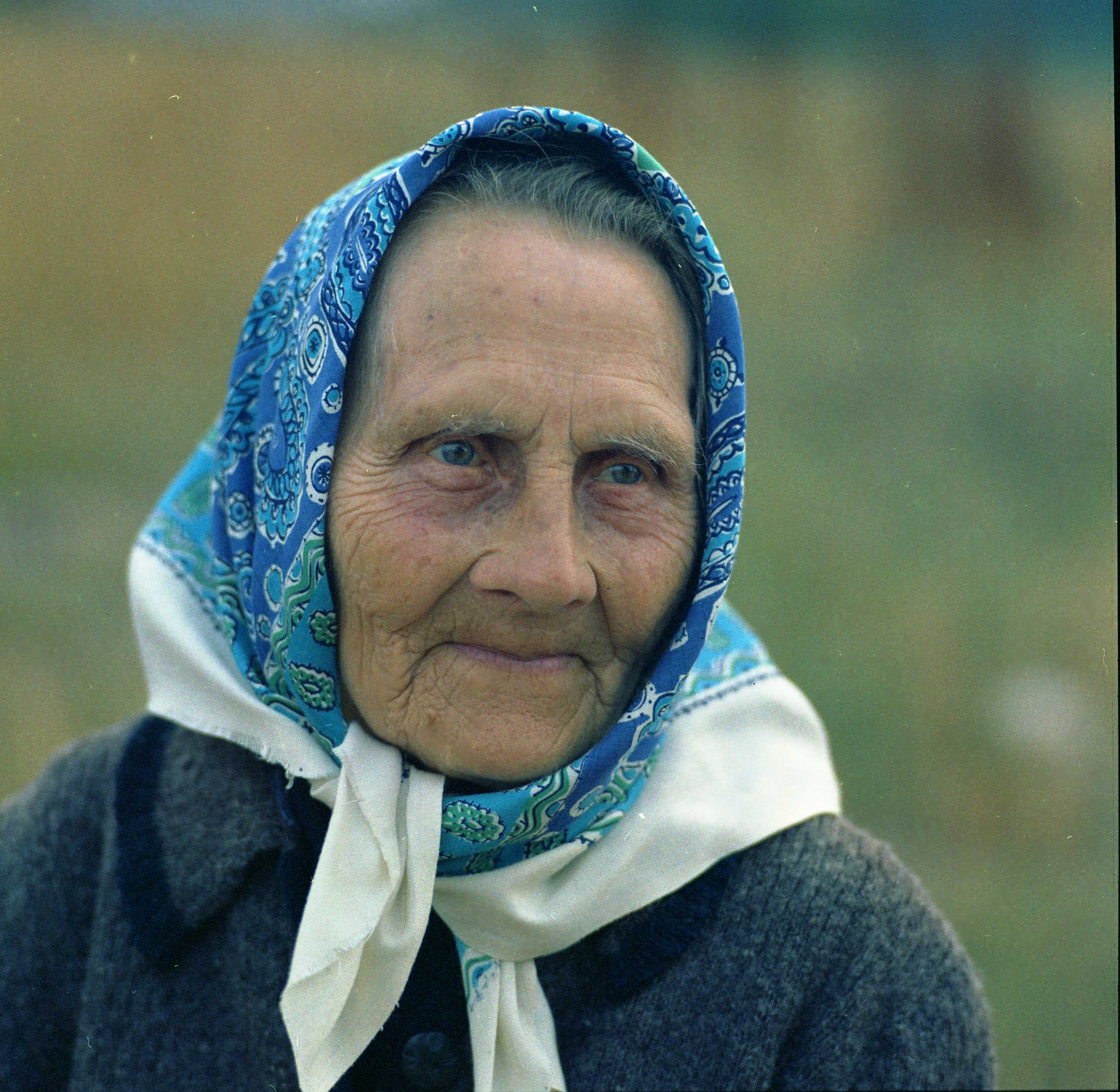
Waldemar Kronberg and Karl's wife Maria tell
I arrived alone in Sweden and, considering the relatives who were still left in the Soviet Union, I made no efforts during the first period to get in contact with them. By the beginning of the 1960s, however, the worst time was over, ”comrade” Stalin had been dead for ten years, and I began to think about contacting my relatives, but did not really know how to go about it. So many years had passed since we parted and the likelihood that my parents would be alive was very small. Possibly siblings, but where would I look for them? The Soviet Union was not easy to deal with, not in any respect.
In itself, it is a sad chapter regarding the family gatherings. For over 20 years I lived separated from my mother and my siblings, but all's well that ends well. There have been a few more meetings now that Estonia is free. No other papers are needed anymore besides passport and money. Now (1996) I have only Karl left from my family, the nieces and nephews belong to another generation and if one has not had the opportunity to associate with them as children, the risk is great that they will remain strangers to some extent. It is Aunt Minna's (mother's niece and the mother of Sveta, Bella, and Anatoli) merit that we met at all. Admittedly, I had some thoughts about trying to reach my relatives in the Soviet Union, but during Stalin's time it was not particularly suitable; the situation improved somewhat during Khrushchev's time. Those who have relatives abroad will for a long time to come appear as potentially suspicious individuals in the Soviet Union and run the risk of being subjected to unpleasant interrogations.
Aunt Minna, my godmother, (mother of Anatoli, Sveta, and Bella) had from time to time urged my mother to write to the International Red Cross and make inquiries, but as Karl told, they did not think I was still in Finland but that the Russians would have caught me and punished me by exiling me to the Kamchatka forced labor camp. At the end of 1962, however, she had sent a letter to the Red Cross. It was around the same time that I began to think about doing something similar regarding Lida and Karl. Mother at this point would be in her 80s and hardly alive given all the experiences in exiles etc. I wrote a search request and had hardly sent off my letter when a Red Cross letter arrived from Geneva. The message read:
"From the International Red Cross Committee's tracing bureau in Geneva we have recently received a request for tracing of You, made by Your mother, Emely Kronberg, Uus tn. 18-1, TAPA, Estonia, Soviet Union. We had begun a tracing of You based on Your previous address in Borås, when Your letter with a request for tracing of Your sister reached us today. Stockholm, 20 June 1963".
A month or so later I had all the papers ready for a trip to Leningrad; trips to Estonia were not yet current then. The borders were closed to foreigners. It took some time to process the Russian embassy, but gradually it yielded results and I took a charter trip by bus from Helsinki to Leningrad.
The bus trip went through Vaalimaa and the control at the border was very thorough; we had to carry out every single belonging from the bus and the customs officers searched every bag and parcel carefully. It took a couple of hours before we could continue the journey towards Viborg. There we got an Intourist guide with us and he told about ”sights” along the road towards Leningrad. The road still went through the former Finnish areas and among other things we passed a memorial in the form of a soldier with a rifle, standing on a large boulder, and the guide recited his lesson, which he had learned in Intourist school:
- If you look to the left you see a monument to the Red Guards who fell in the First World War fighting against Baron Mannerheim's White Guard!
”Well, a voice was heard from someone in the back rows. Where is the memorial
to the fallen White Guards?"
There was a long silence in the continued propaganda about the Red Guards' efforts in past times.
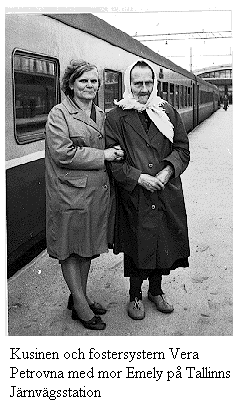
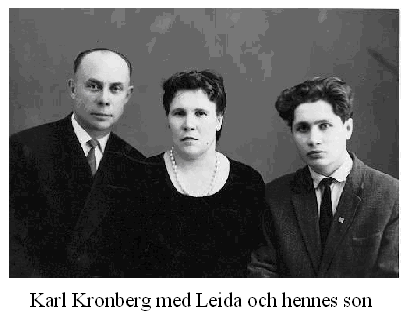
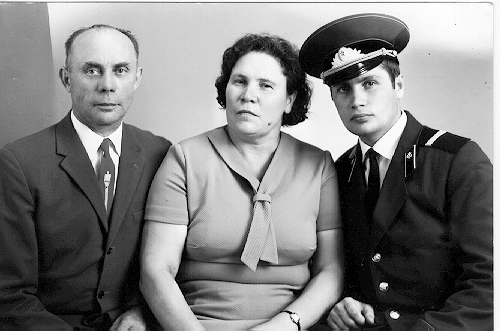
Upon arrival in Leningrad we met in front of the hotel ”Leningradskaya” on Nevsky Prospekt. There stood mother, Karl, Lida, and Lida's son Valdemar. They had not been in Leningrad for a long time and had nowhere to stay. I managed to arrange a room for them as well, at the modest price of 5 rubles per night. As tourists we had to pay much more - and that in Western currency.
There were no heartbreaking scenes; one does not stage such in our family, neither persistent hugging nor kissing. To an outsider, the meeting would have seemed like a meeting arranged a couple of weeks earlier. No spectator could have guessed that here, in all quietness, part of a family drama was unfolding, a reunion after 20 years. Mother seldom shed any tears; such sentimentality did not suit a self-aware former Estonian peasant woman.
Now we could tell each other about everything that had happened during those years. The evening became long and it was time to take to our beds. We did not have so many relatives left; Karl said that several years ago he had visited our foster sister and cousin Vera and he thought he remembered the address where she lived. He and Lida set off and returned only at lunchtime together with a lady who turned out to be Vera (Elvira Petrovna), one of the few cousins still alive. Now the acquaintance was established and in the evening we set off to Gavanskaya 24, near the passenger harbor. Her husband had died a few months earlier, leaving her with two children: 16-year-old Margarita and 13-year-old Tatjana. They had a true Soviet dwelling, one room and a share of the kitchen in a three-room apartment on the 5th floor in a house that looked like it was from the last century, but was in fact built in 1953.
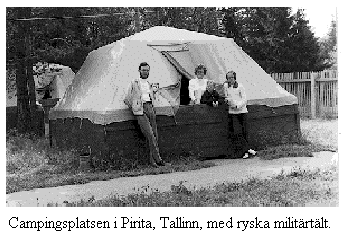
For my Swedish family members, there were also some new experiences. Much was new. Some of the new was merely troublesome, but at the same time they learned what the Soviet Union and its communists were like: sluggish administration, queues, and other difficulties, not least with the toilets. Someone has said that a country's level of civilization can be judged by the condition of its toilets. In that case, the Russians' land was a very primitive society, far from the society where Lenin promised to line the toilets with gold after the revolution. Toilet paper was almost never available; the times it was available, the ”toilet paper” consisted of old issues of ”Pravda” or ”Izvestija”. After wiping the backside, these ”toilet papers” were by no means to be placed in the toilet bowl but in a basket next to it. After that the first attempt to get the girls into the campsite toilets, the visits there completely ceased. Fortunately, we could take care of our business at the relatives' – both in Leningrad and in Tallinn.
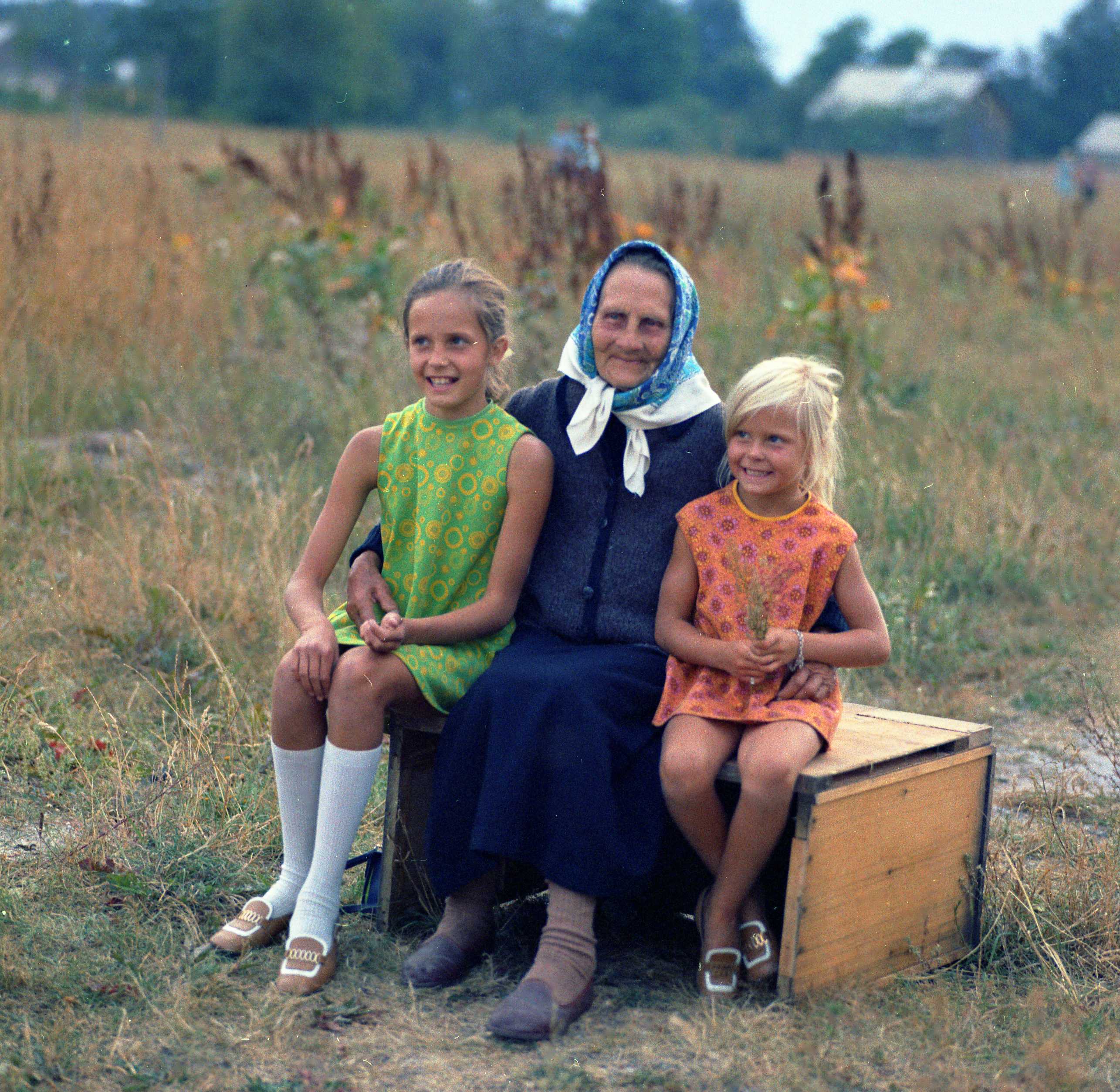
When we were to Russia with the family, we made quite a few excursions: to museums and other sights in Leningrad. During the visit to the Hermitage, Maria (then 12 years old) happened to lose the ear of her beloved toy ”Ludde” and catastrophe was near. By this time, ”Ludde” was so worn and almost used up that the ear was hanging by a thread – and now the ear was gone. She remembered that she still had the ear just before we were to go out and it was clear that the ear had fallen off in the crowd through the exit passage. We knew how unhappy she would be if the ear did not come back so I decided that we would try to find it. We had almost come out of the large stream of people and I said to Maria:
- Now you speak Swedish, loudly and clearly so the Russians hear that you are a tourist!
We turned and pushed our way forward in the oncoming crowd in search of ”Ludde's”
ear and - luck was on our side. Halfway into the Hermitage we discovered the ear, but by then surely several hundred Russians had stepped on it and upon reaching the relatives we had to wash and disinfect it. Ann-Marie and the other relatives had gone out and when we came up to them Ann-Marie said:
- I saw immediately that you had found the ear, Maria's face was beaming.
It is said that it is good to know languages, but in certain cases (at least in Russia) one should not use one's knowledge but pretend to be a ”dumb” tourist, ignorant of the Soviet conditions. The following event can illustrate this.
We were to visit Peter the Great's summer residence Peterhof (Петродворец) and took a ”Meteor”, a hydrofoil boat in the morning from the departure point in front of Peter the Great's statue near the Winter Palace. After having spent a few hours there and seen all the beautiful fountains, the clock was leaning towards evening, it was time to head back to the relatives in Leningrad. I had a premonition (after listening to some conversations in the queue to the ticket office) that using Russian would only lead to difficulties. When I then came to the ticket office, I spoke English to the ”babushka” who was sitting in the ticket office and asked to buy 4 tickets for the return trip to the city center with the next boat departure. She explained to me in Russian that the queue for the boats was long and that we could get tickets only for a trip in three to four hours. I continued with my English, but largely without result until a young female student, who had overheard our conversation, came up to the ticket office. She explained to the ”babushka” (an elderly lady) that we were foreigners who wanted to see as much as possible of Russia's sights and did not understand our rules and that she should give us tickets for an earlier boat departure. After some deliberation, the old woman agreed to the student's proposal and we could a few minutes later take the boat, which was at the dock ready for return.
Another similar event occurred in 1985 when Ann-Marie and I traveled to Leningrad in the car of the Finn Heikki Räty.
Between the border and Viborg we came to an uphill slope with a gentle curve. There were two lanes on the hill and almost at the crest there was a side road to the right. At the top of the crest stood a guard hut with some "militia", i.e., Russian police. We were stopped and they asked me to come into the hut where they wanted to see my driver's license.
I showed the license and then they brought out a board with a picture from which it appeared that I should have used the left turn signal when passing the side road. The "transgression" would cost me 3 rubles.
- No, no! I said in English and continued by pointing out that one does not signal when driving on a lane-marked road.
It was in August and the hut's windows were open. I heard how a "kaftantjik", a half-Asiatic Russian, said:
- Demand 10 rubles from him!.
I was close to having to reveal my language skills and say:
- Now you come with me to Viborg and explain to your boss whether it costs 3 or 10 rubles and why you are abusing your position, but I managed to refrain from that action and said:
-All right! I´m going to pay 3 rubels if I kan take a picture of your cartoon, I said and pointed at the sign according to which I should have signaled.
-Njet, njet! That was not allowed.
There was some paper lying out and I started to draw. It became the square in front of the Winter Palace where there are masses of dashed lanes. I asked the police, using a number of Russian words pronounced with a strong accent, whether one signaled every time one turned within the lane and they became very hesitant.
You call your natchalnik! (boss), I said and pointed at the phone. After some hesitation he picked up the receiver, dialed a number and said that it was a foreigner who didn't want to pay the fine.
I reached my hand towards the receiver and said:
- May I talk to your boss?
This resulted in him hurriedly hanging up, returning the driver's license and we were allowed to drive on. There was probably no conversation partner on the other end. Those who did not have such thorough knowledge of Russia and Russian conditions would surely have paid their three rubles to be able to continue. (It was barely 30 kronor, so the sum was not a problem.) Speaking with "forked tongues" was the prerequisite for surviving in the Soviet Union and that applies to some extent also in the new Russia. That I still had to pay 3 rubles in penalty is another story. One does not make a U-turn on Nevskij Prospekt without some obliging militia showing up and stopping one..
The Russians themselves are very aware of the GAJ's working methods and no one reacts, there are quite a few jokes about them.
A militiaman has heard that his wife might not be entirely faithful and he decides to investigate how it is.
He arrives unexpectedly – and sure enough – the wife has another man with her whom she quickly manages to hide under the bed in the bedroom. The militiaman walks around and looks in the wardrobe, in the bathroom and says
Nothing here, nothing here….
Eventually he comes to the bedroom and sees that there is a hand sticking out from under the bed and the hand holds a 100-ruble note. The militiaman bends down, takes the note and says:
- Nothing here either.
For our family members there was a lot that was new as well. On the way into Viborg the girls saw an ice cream stand and naturally wanted ice cream. We stopped and bought each of them an ice cream for 15 kopecks apiece. However, after a while we noticed that something did not fit the picture of children eating ice cream. It turned out that the ice cream was made of real cream with a far too rich taste for our Western children who are used to a somewhat leaner variety. We never again needed to stop at ice cream bars or kiosks.
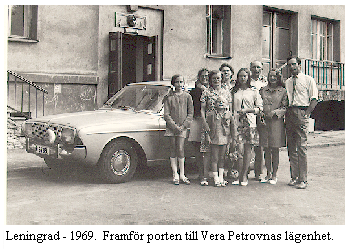
Our girls attracted a lot of attention with their clothes, not for fashion's sake, but because they (according to Russian perception) were literally lightly dressed. They wore short socks while Russian children in cloudy weather were bundled up like little gnomes. The Russian toddlers also caused some amusement; they were wrapped up like Christmas presents, often with a bow in pink or blue around the package indicating whether it was a girl or a boy.
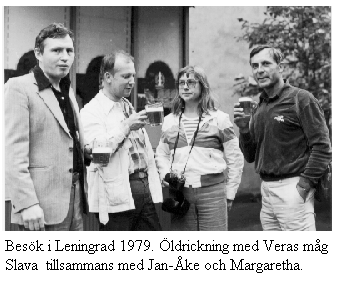
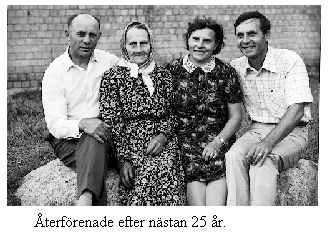
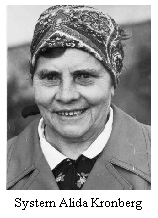
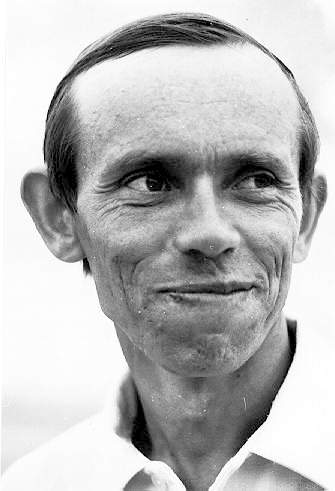
Despite the somewhat overly ambitious programs during the Soviet visits (so that Westerners would not have spare time for closer studies of the real Soviet Union), there were still many opportunities for me to visit relatives in both Leningrad and Tallinn. Over the years there were quite many meetings. As long as mother Emely lived, she used to join, even in Leningrad. During such naval visits the interpreters always have a lot to do, but some evening usually became free and then I took the opportunity to be with the relatives. The Tapa folks: mother, Karl and Alida would also come to Leningrad.When I found out when the Coastal Fleet would visit the Soviet Union, I wrote to the relatives and then we gathered and had a family reunion with food, drink, music and song. When Waldemar (my nephew) was there, he could play a tune on the accordion, sometimes Karl played some waltzes on the violin and Alida accompanied on the guitar.
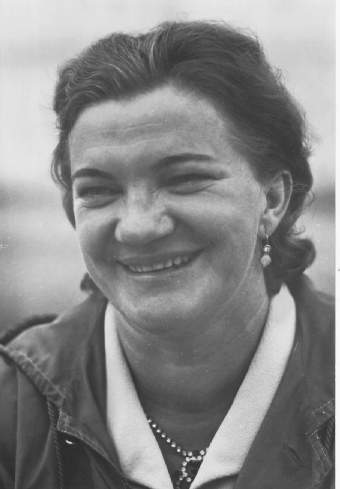
Karl had lived for several years in the Caucasus, but now he was back and had a woman with him. She was a lady from an Estonian fruit collective located on the slopes of the Caucasus. Her name was Leida and in the Caucasus she supported herself mainly by moonshining, even though she was formally employed at the collective's brickworks. At the beginning of the century some German landowners had planted large apricot orchards; these had now largely become wild and - as Leida said - raw materials were not lacking. When I asked if she wasn't afraid of getting caught for moonshining, she answered that there was no danger at all. The local militia chief and his entire entourage were among her steadiest customers. Leida was a very enterprising woman, good at distilling vodka, cooking, playing guitar and singing. Having grown up in a mixed company that largely consisted of Crimean Tatars, she mastered that language and could sing Tatar songs, which Karl described as sheep-bleating.
- The Orient begins where the women sing in this manner, he used to say. Unfortunately Leida fell for her own trick. After a certain number of years in Estonia she traveled back to the Caucasus and, according to Karl, drank herself to death on her brew. Leida was not only a skilled distiller, she was also a real cook, it showed on both her and Karl. It is the only time I have seen Karl reasonably well-fed; otherwise he belongs to the lean and sinewy type.
Over the years there were quite many meetings; as long as mother Emely lived, she used to come along, even to Leningrad.
Sometimes I also invited someone from the ship and Boatswain Möller from Karlskrona probably won't forget in a hurry the evening in cousin Vera's small apartment. Karl was together with Leida; they had come to Leningrad with some bottles of moonshine, a couple of 5-liter 'putäller' and it was hard to tell which was the state liquor and which she had distilled herself.
Leida was no lightweight, large and sturdy, and Boatswain Möller was no slouch either when it came to weight. Livened up by food and drink, they were now going to dance in Vera's small apartment, two small elephants in a - if not a china shop - then at least a cramped little Soviet apartment, and it so happened that they stumbled and fell into Vera's sofa. It creaked ominously, but held, fortunately. The Russian furniture is quite sturdy; to some extent people still live in the old, bourgeois furniture style; on the other hand, overcrowding is great and the furniture that exists is used much more often than in the West. In consideration of that, it is also much more stable. Moreover, furniture is hard to come by in the Soviet Union. The somewhat late hour, the festive mood and a certain prior consumption may have contributed to the difficulties with balance.
After all the eating and drinking I had become quite drunk, lying on the sofa and not feeling particularly well. My mother Emely sat at the other end of the bed and shook her head sympathetically. Oh, oh, oh, those were the days!
Despite her forbidden occupation and attraction to her own alcohol production, Leida was a stroke of luck for Karl. The first time I met my family in the 60s, after about 20 years of separation, Karl was in quite poor condition, run down both from lack of food and an excess of liquor. Shortly after, he went to the Estonian collective near Krasnodar and Gulkevichi and the next time I saw him he was a completely different person. Leida could not only distill liquor, she was also an extraordinary cook; it showed on both her and Karl.
Given the circumstances, I still managed to spend quite a lot of time with my relatives. Mother lived another 17 years after we had met (she died 1979-12-13), Lida for 25 years (she died 1989-12-13) and Karl (1998) is still alive at nearly 82 years old and quite spry for his age, considering how much he has had to endure during his earthly journey. I have helped him get his own apartment of two rooms and kitchen; he has never lived so well, but now and then he neglects the rent and claims that his pension does not cover all expenses.
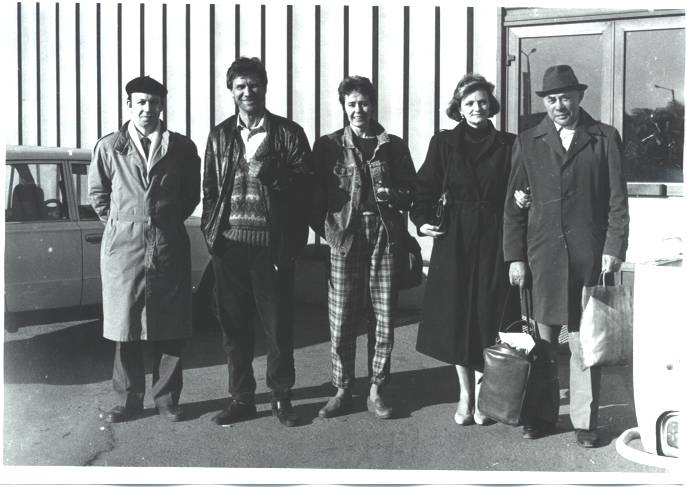
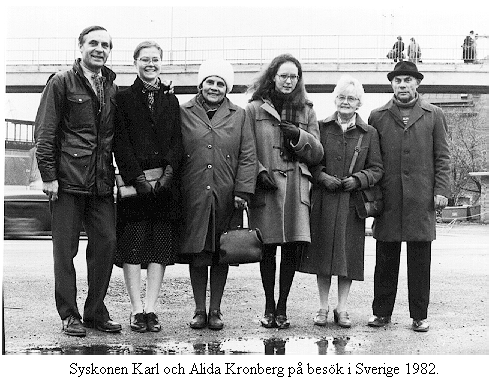
Moonshining is a 'popular' pastime just about everywhere in the world, especially if the practice is forbidden and state liquor is expensive. During a visit to Maja's 'fiancé' Herman, he offered moonshine, which however was not particularly good. Thick and oily, but we had taken a sauna and needed some fluid replenishment. In 1982 my siblings were for the first time on a three-week visit to us in Sweden and were greatly astonished at how reality in the capitalist world looks. Spacious homes, summer cottages with manicured lawns and good roads; that was something entirely new for those who had lived in the 'workers' paradise'. We stayed alternately in Nyköping and at the cottage in Helgesta, made excursions to relatives in Gothenburg and Falkenberg and friends in Uppsala. Then several years passed before their next visit, because the Soviet authorities did not grant any exit permits. When I talked to my siblings about it, Karl said that it was 'Njet' every time they went to the local OVIR passport authority in the city of Rakvere and tried to get permission to travel to Sweden.
In 1987, when Brezhnev had passed away and Gorbachev had taken over, I thought that now it was once again time to get a visit from Karl and Lida. I wrote a letter to Mikhail Gorbachev and enclosed a copy of the invitation for my siblings. It took effect almost instantly (by the measure of the Soviet authorities). Karl told that when they had traveled with my invitation to the passport office in Rakvere, they were immediately called in and the following conversation is said to have taken place according to my brother Karl:
- It's good that you came, there is an invitation for you to visit Sweden.
-
But we don't have any photographs with us, Karl objected.
- That's not needed, we'll take the photographs from the unapproved applications
Nu tog det bara någon vecka innan formaliteterna blev klara och jag kunde hämta mina syskon från färjan i Frihamnen i Stockholm.
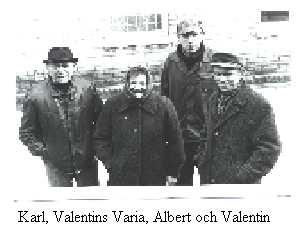
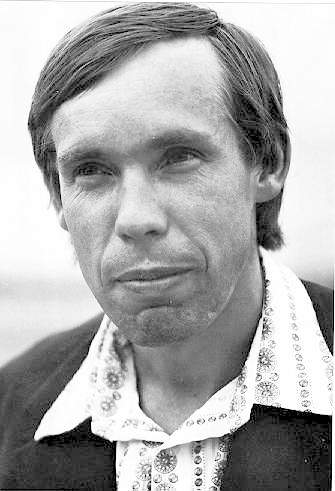
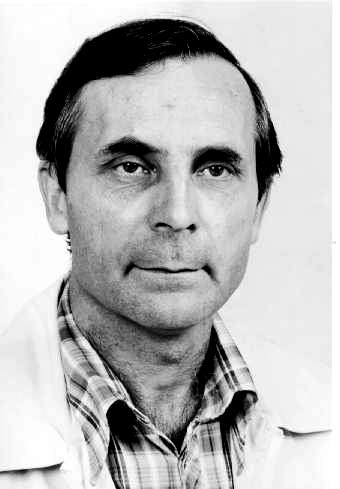
. Since Estonia became independent, Karl has been here a couple of times, among others with my namesake, his son Albert. They had a wish to acquire a car and we visited some scrapyards to get a Lada, Albert was a specialist at repairing such. In Mariefred we found a decent specimen for 1500 kronor and we towed it to Frihamnen for onward transport to Estonia. We have also had visits from cousin's child Bella with husband Rein and Karl's granddaughter Alena with her Andrej. Waldemar with wife and Margaretha with Slava visited us several times in the 80s. Despite the difficulties with invitations etc., it was cheaper for them to travel then than it is after "perestroika". Now they don't have any money for such excursions.
In the autumn of 1996 I was to travel to Tapa to visit my brother Karl. The departure day was to be a Thursday at the end of September, I usually traveled on the Thursday-Friday night and returned with the Tuesday-Wednesday ferry. The stay over Saturday-Sunday gave an opportunity to meet also such relatives who were still working.
On Wednesday evening before the departure on Thursday, Maria called and announced that now she wanted to do a family cruise to Finland, she had gotten hold of cheap tickets and the departure would be on Friday evening.
- You can't make up your minds anyway so now it's time, she said. Katarina could come along but not Tomas.
I postponed my trip to Estonia and we did a family cruise over the weekend to Finland instead. The following Wednesday morning we heard about the "Estonia" disaster.
For the rest of the week it was quite quiet on the telephone, there were many friends and acquaintances who didn't dare call us. They knew of my intention to travel and were afraid that I might never come back. Only a few days later did we start getting phone calls.
Recordings
- 1969 Reseberättelse till Leningrad Karl och Leida sjunger.mp3
- 730903 Mor berättar om sitt liv A.mp3
- 730903 Mor berättar om sitt liv B.mp3
- 901028 Samtal med Waldemar om släkten kass est sid C.mp3
- 901028 Samtal med Waldemar om släktenA.mp3
- 901028 Samtal med Waldemar om släktenB.mp3
- xx Maria I klagar över Kars roll i äktenskapet.mp3